TL;DR. The 1-3-5 rule caps your day at nine tasks: one big, three medium, five small. The cap is the entire idea. An open list lets you write everything down and decide nothing, then judges you at 6pm against a day no human could have had. Nine slots force the sizing and the ranking to happen while you are still calm. Leave slots empty on purpose if your job is reactive, and if the big task cannot be finished in one sitting, it is not a task, it is a project.
For years my to-do list was a document that only grew. Things went on it. Almost nothing came off it except by decay. By Thursday it held forty items, six of which were real, and the honest function of the list was no longer planning. It was guilt storage.
The fix that worked was not a better app. It was a ceiling.
The rule
One big task. Three medium tasks. Five small tasks. Nine slots, and when they are full, they are full.
That is the whole framework. It was popularised by the career site The Muse and spread through planner templates from there. No research, no acronym, no certification. Just a shape that happens to fit inside a working day.
The numbers matter less than the ceiling. What makes the rule work is that it refuses a tenth item, which means something has to be cut before the day starts rather than abandoned halfway through it.
Why a capped list beats an open one
A cap forces sizing. An open list gives "reply to Anna" and "rewrite the pricing page" one line each, as if they were comparable objects. The moment you have to place each item in a band, you are doing the estimation you would otherwise skip, and estimation is where unrealistic days get caught.
A cap creates a finish line. An open list has no completed state. You can only fail it slowly or quickly. Nine items can genuinely end, and a day that can end is a day you can stop working in.
The alternative is measurable, and it is not flattering. Across our own task data, only about a third of what people write down ever gets completed, and the work that does get done is overwhelmingly done immediately rather than worked off gradually.
A cap surfaces the overcommitment early. With a ceiling, you notice the day is impossible at 8am, when the fix costs nothing. Without one, you notice at 6pm, when the only available response is to feel bad.
Do the arithmetic once and it becomes obvious. A big task is two to four hours. Three mediums at thirty to ninety minutes each is another one and a half to four and a half hours. Five smalls at five to fifteen minutes is roughly half an hour to an hour and a quarter. Fill every slot at the top of its band and you have planned a ten-hour day of pure execution, with no meetings, no interruptions and no lunch.
So nine is not a target. It is a maximum, and most good days do not reach it.
The list is written by an optimist
There is a pattern I see constantly in the habit data on this site, and it applies to task lists just as cleanly: the version of you doing the planning is not the version of you doing the work.
Across 7,800 tracked habits on Loggd, around 45% were never checked off even once, and another 23% were checked exactly once and then never again. The full breakdown is in habits people quit fastest. Ambition at setup time predicts close to nothing. What predicts anything is whether the thing was small enough to actually do on an ordinary Tuesday.
Task lists fail the same way. The Sunday-night version of you is well rested and enthusiastic and books Monday solid. Monday arrives with a sick child, a broken deploy and a meeting that runs long.
The cap is a way of writing lists for the tired version, in advance.
Sizing without overthinking it
| Band | Rough length | Looks like |
|---|---|---|
| The 1 (big) | 2 to 4 hours | The draft, the build, the difficult conversation, the thing that makes today count |
| The 3 (medium) | 30 to 90 minutes | A review, a section of a document, a proper reply, a plan for something small |
| The 5 (small) | Under 15 minutes | The booking, the invoice, the form, the message you keep not sending |
Two rules keep this from becoming an exercise in its own right.
First, if you cannot place a task in a band, the task is vague, not hard. "Sort out the website" has no size because it has no end. Rewrite it until it has one.
Second, the big task should leave something behind that did not exist this morning. A file, a decision, a sent message, a finished section. "Work on the report" is a direction. "Finish the first draft of the summary" is a task.
If your head is too full to sort anything, empty it first. That is the one job of a brain dump: get everything out of working memory in one pass, then sort. Sorting and remembering at the same time is what makes planning feel exhausting.
And before you place items, it is worth deciding what should not be on the list at all. The Eisenhower matrix is a blunt instrument for exactly this: urgent and important work goes in the nine slots, important and not urgent work gets a scheduled slot later in the week, and the rest is honestly named as something you are choosing not to do.
Adapting it for a reactive job
The standard 1-3-5 assumes you own most of your day. Plenty of people do not.
If you work in support, operations, on-call engineering, healthcare or retail, or if you are the person a small child comes to first, a significant share of your hours is claimed by other people at short notice. Running a full nine-item plan against that is not ambitious, it is a scheduled disappointment.
Three adaptations that hold up:
Leave slots empty on purpose. One big and three small is a legitimate plan. The empty capacity is not laziness, it is the interruptions you already know are coming, written down honestly rather than pretended away.
Shrink the big one. On a reactive day the big task should be the largest thing you could finish inside your typical uninterrupted window, not the largest thing on your mind.
Judge the day on the 1. If the one thing that mattered got done, the day worked, regardless of how many small items are still open. This is the single most useful reframe in the whole method.
Meeting-heavy days
Count your gaps before you pick anything.
If your longest uninterrupted stretch is forty minutes, you do not have a big task today. You have a medium one, and the correct plan is one medium promoted to the top slot plus a few smalls that fit in the ten-minute cracks between calls.
Meetings do not go on the list. A to-do list holds work you perform, a calendar holds appointments you attend, and merging them produces a document where a day of back-to-back calls looks like a productive day. If a meeting needs preparation, the preparation is the task.
When the big thing is really a project
This is the most common failure, and it is quiet.
The test is simple: could I finish this today, in the time I actually have? If the honest answer is no, it is not a task. It is a project, and projects do not belong in the big slot because they can never be completed, which means the day can never be won.
The symptom shows up in carry-overs. The same item rolls forward four days in a row while nine slots underneath it churn. That item is not moving because it cannot move in a day.
The fix is to find the finishable slice. "Rewrite the pricing page" becomes "draft the headline and the three plan descriptions". "Do the taxes" becomes "download the four statements and put them in one folder". Neither is impressive. Both end.
Keep the project name somewhere else, in a note or a project list, and let today's big slot hold only the next piece of it.
Running it in five minutes
The planning itself should be short enough that you never skip it.
- Empty your head. Two minutes, unfiltered.
- Cross out what is not yours or not now.
- Pick the one. It goes in first, before the small stuff has a chance to claim the space.
- Fill three mediums and five smalls, or fewer if the day is already spoken for.
- Stop.
Doing this the evening before is better than doing it in the morning, because tomorrow-you starts the day with a decision already made rather than a blank page and a coffee.
The 1-3-5 task planner on this site is the version I use: nine slots with optional time estimates, unfinished items offered as carry-overs when you start the next day, and the last seven days kept in a history panel so you can see what actually got done. It stays in your browser, there is no account, and nothing is uploaded.
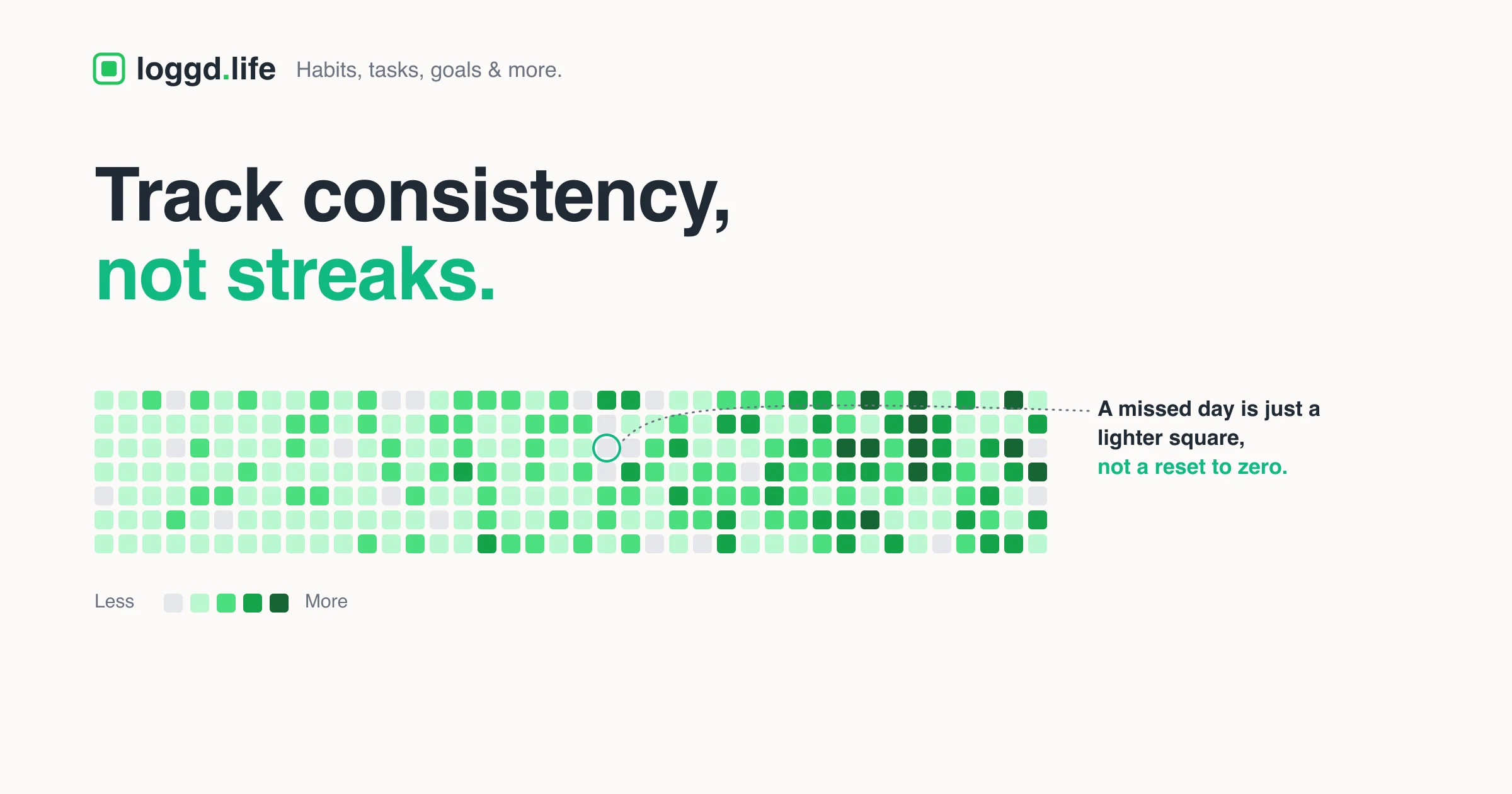
One honest note about it. The planner counts a streak, where a day is complete when the big task and most of the mediums and smalls are ticked. For some people that is a useful nudge. For others it is an invitation to tick things that did not happen, which makes the record worthless. Mark the day as it was. I have written before about why I would rather show a contribution grid than a streak counter, and the same logic applies here.
What the rule does not do
It does not protect the time. A list says what, not when. If your big task keeps evaporating into other people's priorities, the list is not the problem and no amount of reordering will help. Block the time.
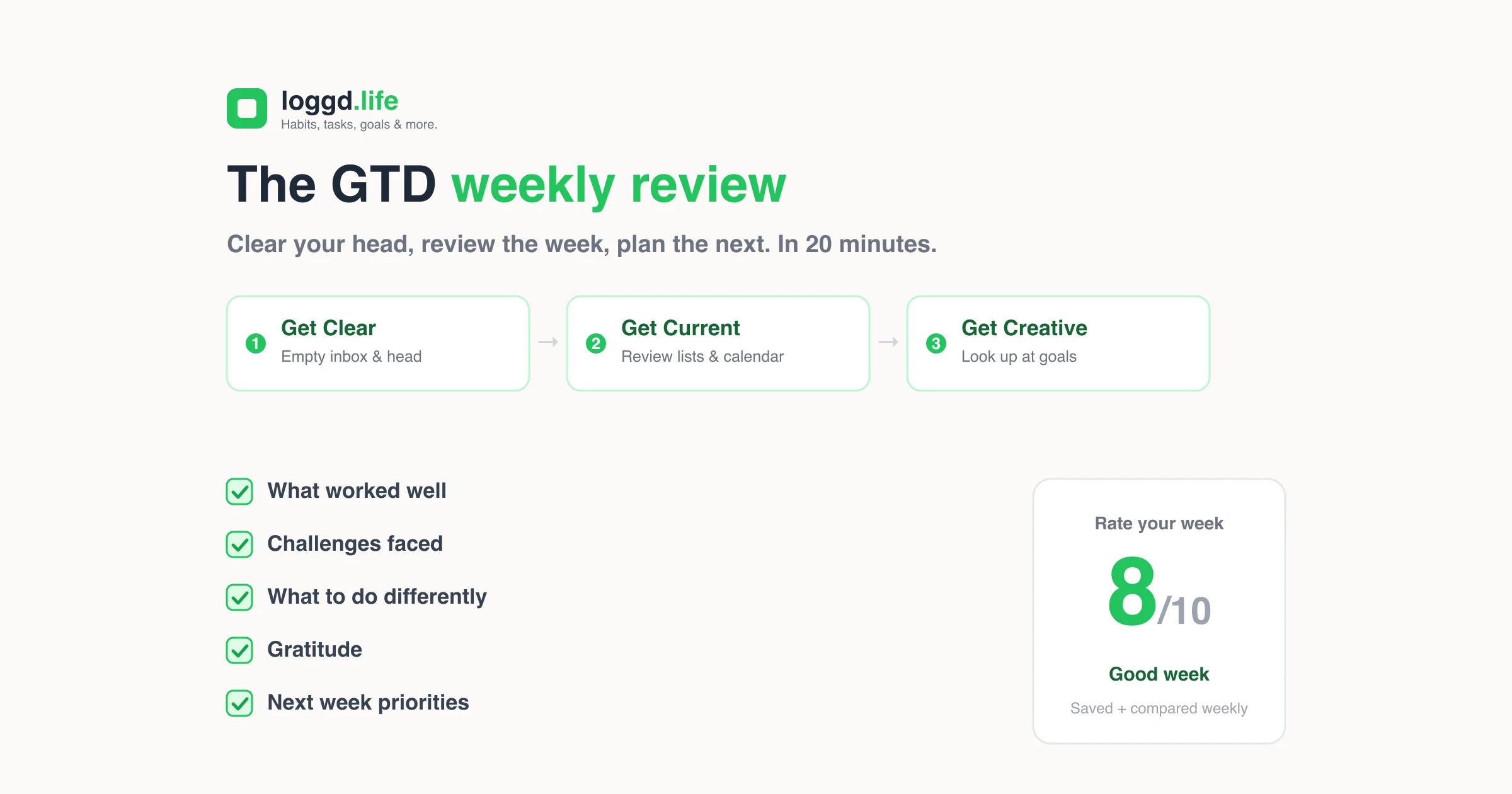
It does not decide what matters this month. Nine slots are a daily instrument. The question of whether the right things are in them is a weekly question, which is what a weekly review is for. A perfectly executed 1-3-5 day pointed at the wrong work is still the wrong work.
It does not survive being gamed. Nine slots filled with five-minute tasks produces a satisfying all-ticked day and no progress. The rule only works if the one is genuinely the hardest thing you are avoiding.
Nine slots. One that matters. Filled the evening before, while you are still the calm version of yourself, and left honestly incomplete when the day goes sideways.
Last updated: September 2026.
Written by Eusebiu, the solo founder building Loggd in public. I plan my days around contract work and a small daughter, which is why every method I write about gets tested against interruptions rather than ideal conditions. I share what the aggregate data keeps showing on Threads.
Keep the record honest. Loggd tracks your tasks and habits as a forgiving contribution grid, so a half-finished day reads as a half-finished day instead of a broken streak. Start free.