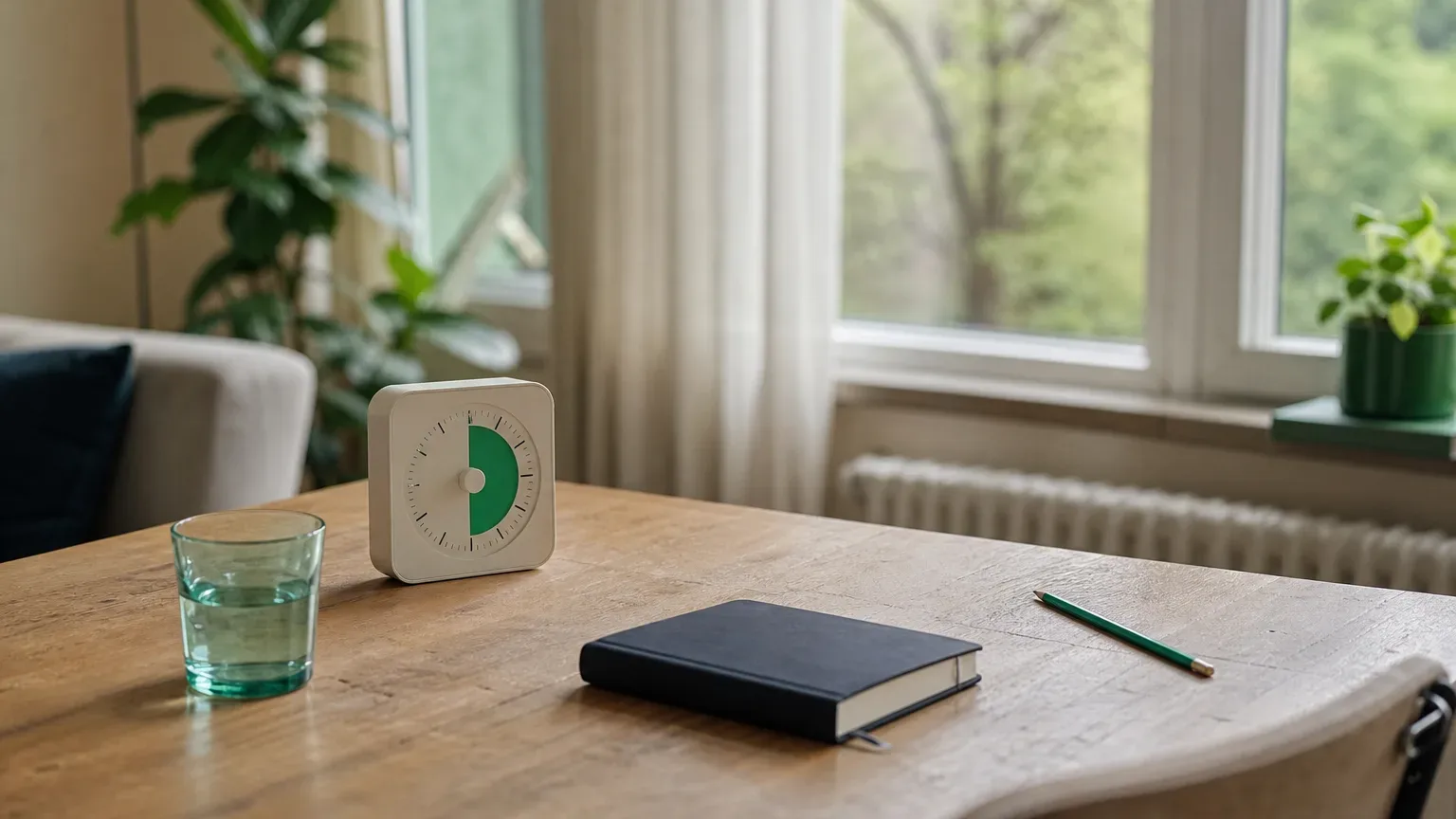
A morning ritual is a small set of actions you do with a clear intention at the start of your day. To build yours, choose what you need from the morning, then give it a version that fits five, fifteen, or thirty minutes.
Your morning starts when you wake, not at a particular clock time. A ritual might give you a quiet moment before caregiving, gentle movement before sitting down, or a reminder of what deserves your attention today.
Keep one recognizable starting action, then adjust how long you spend on it. That way, a packed morning can still have a small pause, while a more open one gives you room to stay with the activity longer.
Morning Ritual vs. Morning Routine
A routine gives necessary actions an order. A ritual gives a familiar action deliberate attention or meaning. These are everyday distinctions, not rigid categories, and the same action can be either depending on how you do it.
Making tea can be one step in getting breakfast ready. Sitting down to notice its warmth before opening your messages can make it a ritual. Your morning can hold both: get dressed and pack lunch, then take a brief pause to choose an intention for the day.
Use your immediate need to decide where to start. If you need to get out the door, a task-focused morning routine may be the most useful choice. If you want space to notice how you feel or decide what deserves attention, add a reflective ritual. You do not need to add activities to an already full morning; a familiar task can be the ritual when you give it your attention.
Before choosing what to do, ask yourself: “What do I want to make room for this morning?” Let your answer guide the activity. A quiet pause, a little movement, and a moment to set a priority serve different purposes, so choose the one that fits today.
Choose Morning Ritual Ideas for Your Purpose
Choose an activity for what you want from the morning. You only need one main activity; these ideas are options, not a list to complete.

- For quiet attention: Sit for a short meditation, notice your natural breathing, or drink tea without doing another task at the same time. Keep breathwork comfortable: breathe normally, without forceful techniques or prescribed holds.
- For movement: Try familiar, gentle yoga movements, comfortable stretching, or a short walk. Adapt the movement to what feels comfortable for you. Some moderate-to-vigorous activity is better than none, but that does not mean every stretch or slow walk reaches that intensity.
- For reflection: Write down one specific thing you appreciated and one sentence about why it mattered. A brief gratitude practice gives you a concrete place to begin; it does not need to become a long journal entry.
- For focus: Name the first concrete action you want to begin after the ritual. “Open the document and write the first paragraph” gives you a starting point without turning the ritual into a full day-planning session.
- For self-care or beauty: Give an existing step, such as washing your face, grooming, or moisturizing, your unhurried attention. Follow the product’s directions and let the familiar action be enough.
- For breakfast or tea: Sit down for the first few bites or sips. Notice the taste and temperature before you move on to the next task.
- For time outdoors: Take a mindful walk on a nearby sidewalk or through a park, noticing what you see and hear. A wooded setting can be a place for forest bathing if one is already convenient, but you do not need a special setting or equipment.
Pick one main activity that suits your purpose and your morning. Leave the other ideas for another time.
 Loggd · by the makers of this blog
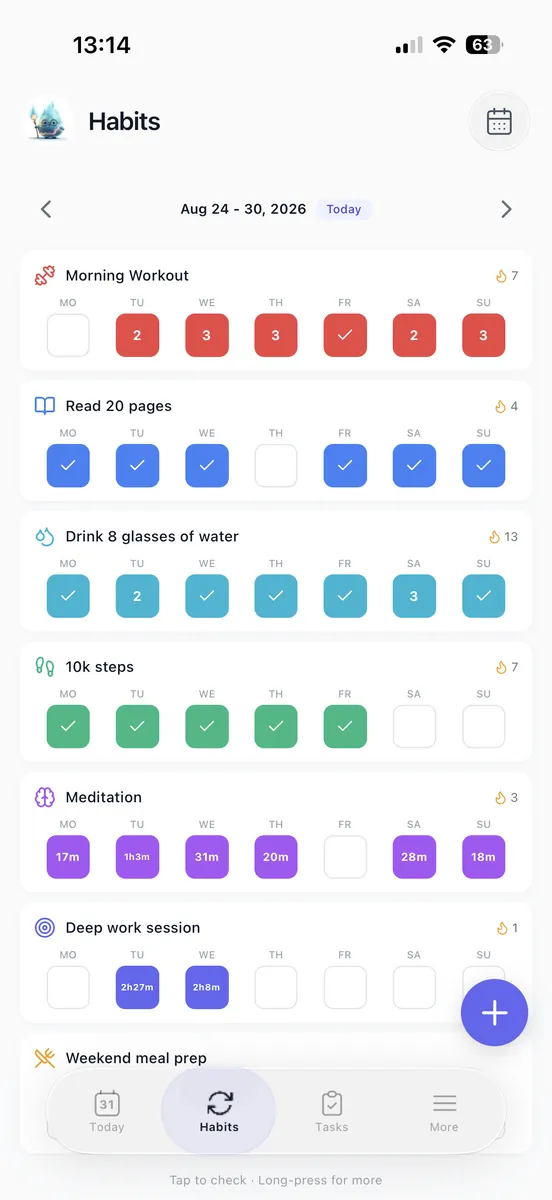
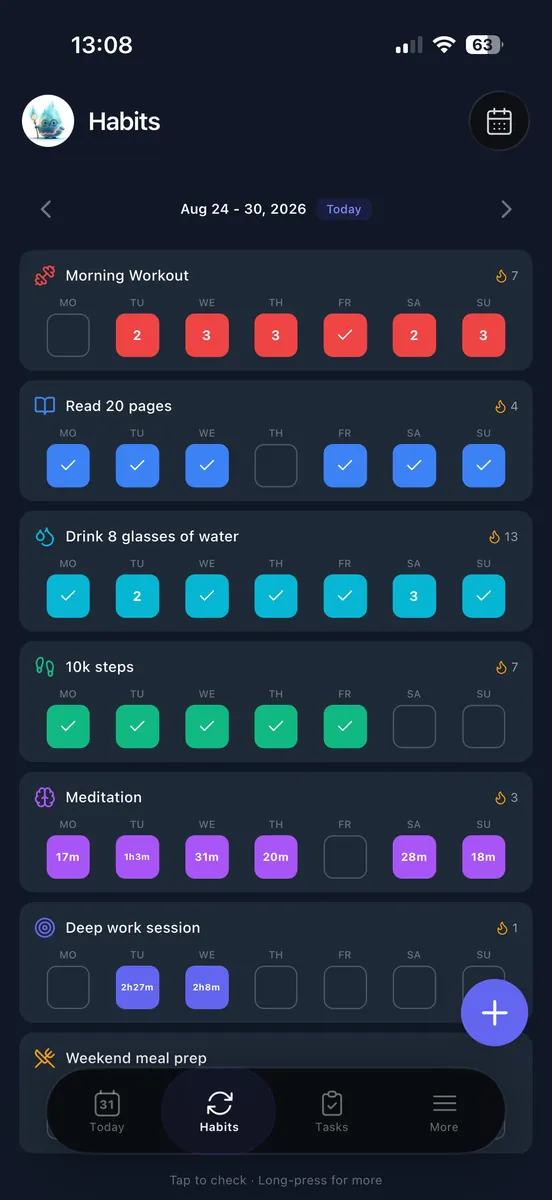
Track your habits, tasks and goals in one free app.
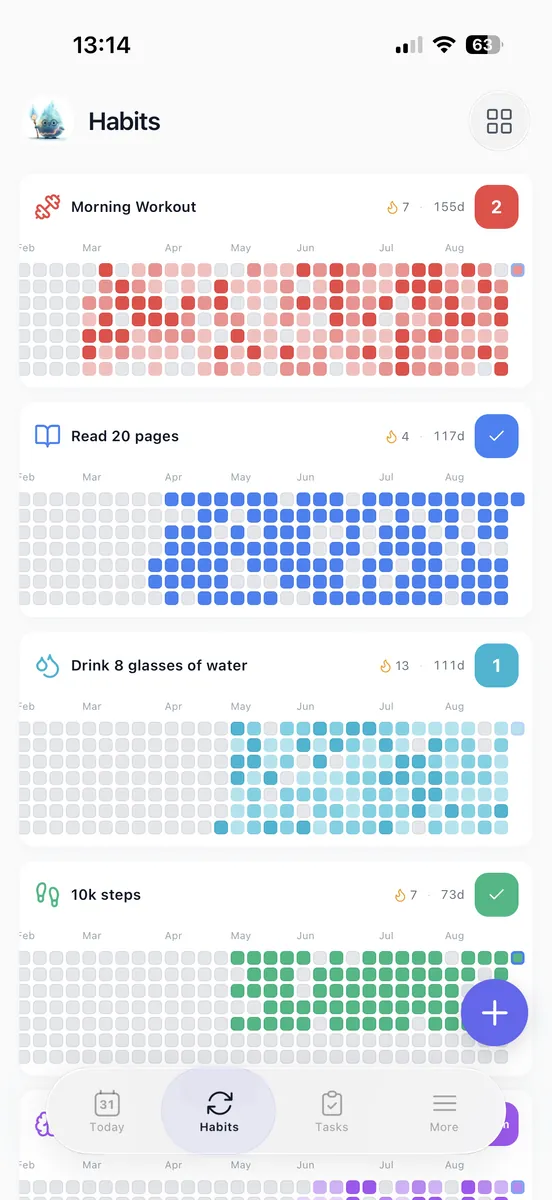
Every day you check off fills in a grid of your last 365 days, so you can see if you are getting better.


Free plan with no time limit. No credit card.


Use a 5-, 15-, or 30-Minute Morning Ritual
| Version | Total time | Arrival | Chosen activity | Closing action |
|---|---|---|---|---|
| 5 minutes | 5 minutes | 1 minute: settle and breathe comfortably | 3 minutes: do one activity | 1 minute: name your next action |
| 15 minutes | 15 minutes | 2 minutes: settle | 10 minutes: do one activity | 3 minutes: reflect briefly and choose your next action |
| 30 minutes | 30 minutes | 3 minutes: settle | 20 minutes: do one activity | 7 minutes: reflect and choose your next action |
Choose the version that fits the time left after your first commitment, not the time you wish you had. Leave room for necessary care, travel, breakfast, and other practical tasks. Thirty minutes is one option, not a better one. Use the morning routine builder to arrange your chosen activities within the time you have.
The middle activity can be a short walk, gentle yoga, gratitude journaling, or sitting with breakfast. Keep the time allocation the same when you switch activities. In the five-minute version, for example, you could settle for one minute, write for three, and use the last minute to name the next action.
If time gets tight, keep the opening pause and closing decision, then shorten the middle activity. You might take a few sips of tea instead of sitting through breakfast, or write one line instead of a longer journal entry. Stop at the chosen endpoint rather than borrowing time from the next commitment. A ritual that leaves you scrambling has outgrown its window.
Set Up the First Action the Night Before
Once you have chosen a schedule, make its first action easy to begin. Tie it to something that already happens, such as brushing your teeth or starting the kettle. After that familiar event, sit down for your pause, open your notebook, or begin the activity you selected.
Prepare only what that activity needs. Put walking shoes by the door, leave a notebook on the table, or clear a place to sit. Choose an endpoint, too: perhaps you stop when it is time to start breakfast preparation or leave for work. A clear ending helps the ritual stay inside its allotted time.
Let the ritual fit around sleep. Do not add an earlier alarm unless your bedtime can move earlier as well. The NHLBI recommends keeping bedtimes and wake times consistent. If your work schedule changes, use a waking cue rather than relying on one fixed clock time.
Evening work can make it harder to stop for the night. Use the shutdown ritual checklist to record unfinished work and give it a stopping point before bed.
Try your setup for a week. Then look at what actually got in the way. Change the first action, timing, or materials as needed. If the notebook stayed out of reach or the walk took too long, adjust that specific part.
Restart After a Missed or Disrupted Morning
Build the ritual for an ordinary morning, including interruptions, rather than one that requires everything to go right. When the morning changes, use a smaller version instead of trying to preserve the full schedule.
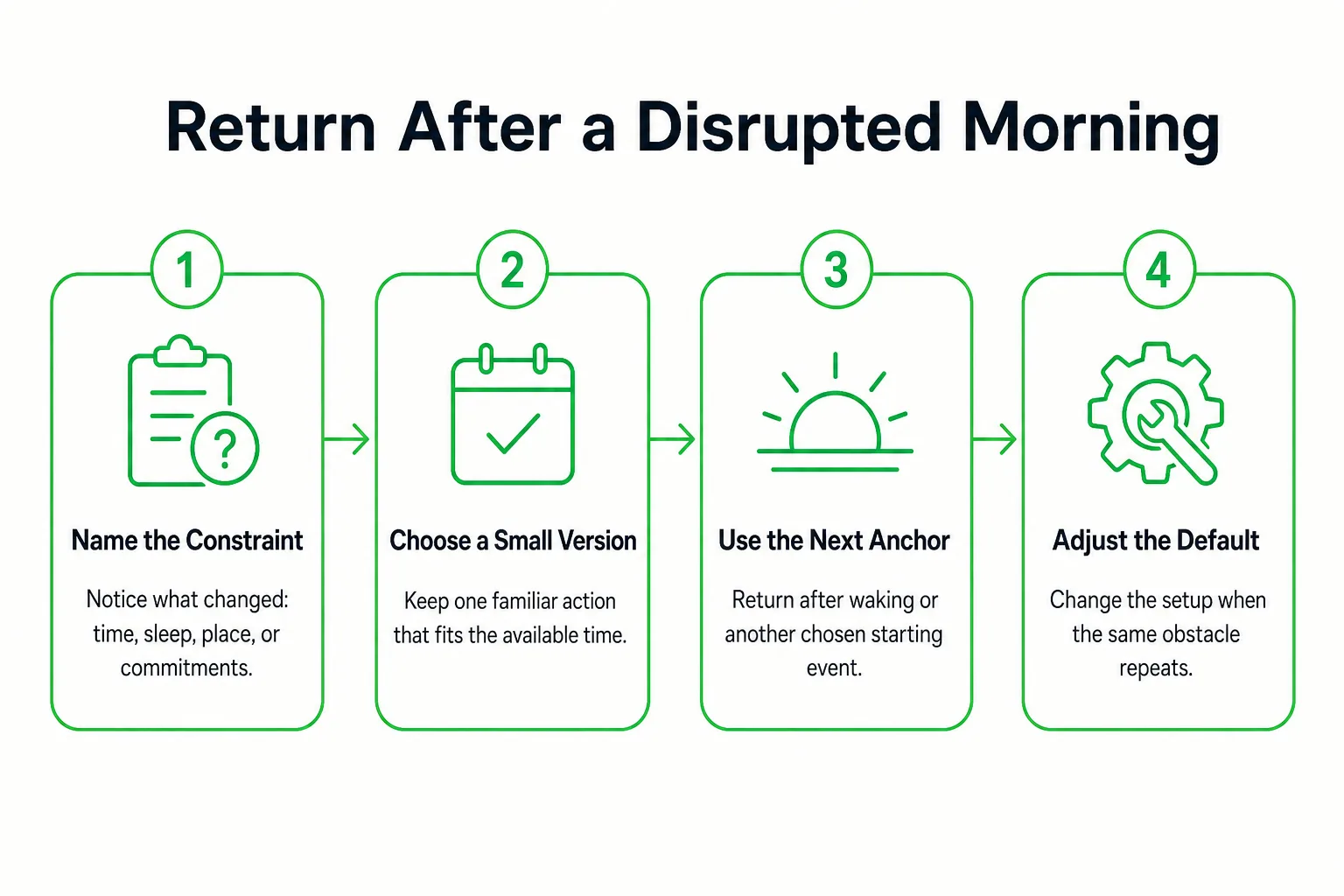
- Name the changed constraint. Did you oversleep, sleep poorly, travel, or have an early commitment? Identify what is different before deciding what still fits.
- Choose the smallest useful version. With an early commitment, pause with a drink and name your next action before leaving. After disrupted sleep, sit quietly for a moment or write one short intention. Leave the longer version for another day.
- Return at the next available anchor. While traveling, you might use a notebook prompt, a quiet pause, or a short walk where practical. If your work hours vary, attach the ritual to waking and essential care instead of a fixed hour.
- Adjust the setup if the same problem repeats. If the full version keeps colliding with breakfast or departure, shorten the default version. If its cue no longer fits, move the anchor to another reliable event.
When the morning window is gone, return after your next main sleep. Do not add catch-up activities to the evening to make up for it. A missed morning is a reason to use the next available start, not to expand the day around the ritual.
Keep the next start small enough to use.
Bring a Yearly Intention Into This Morning
Use a few minutes of your ritual to connect a yearly intention with one action today. Take an intention from an annual review or a goal you already have, then ask: “What would give this a place in today’s ordinary life?” The University of Minnesota Extension recommends choosing small, attainable steps toward a long-term goal. The point here is to identify one next step, not to complete a full review before breakfast.
Say your yearly intention is to spend more time outdoors. If you have room in the morning, use part of your chosen activity for a walk on a familiar route. If leaving home does not fit, decide when the walk could happen later. Either way, connect the broad intention to a specific opening in the day.
For a learning goal, name the next page to read or practice exercise to try. “Learn more” is too broad to act on this morning; a page or exercise gives you a starting point.
Keep the reflection brief with three prompts: What still matters? What fits today’s constraints? What action follows this reflection? Write a few words, or answer in your head, then move on. You do not need a fresh annual review every morning. The ritual can help you reconnect an existing intention with an action that fits today. If you need to organize the rest of your work, turn that choice into a workable day with the ten-minute day-planning guide.
Do You Need a Morning Liver Reset Ritual?
Leave liver-reset drinks, supplements, and cleansing protocols out of your morning ritual. Choose an activity for what you can observe and do, not because its marketing promises to flush toxins or reset an organ. A ritual is not a treatment plan. If you have a liver condition, a medication question, or are considering a supplement, talk with a qualified clinician before changing your care.
There is a useful distinction between choosing an ordinary activity and expecting it to deliver a medical result. You might have breakfast, drink something you enjoy, take a walk, do familiar gentle movement, or sit quietly for a few minutes. These can be parts of a morning ritual without being framed as a cleanse or cure.
Keep claims modest for other activities, too. The NCCIH notes that much mindfulness and meditation research is preliminary or not rigorous enough for strong conclusions. That is a reason to judge a quiet practice by how it fits your day, not to treat it as a proven health intervention.
Try three practical questions: Did the activity fit the time you had? Did you want to repeat it? Did it leave room for necessary morning tasks? Keep an activity that works for your morning, and drop any promised medical result.
Sources
- Adult Activity: An Overview | Physical Activity Basics
- Sleep Deprivation and Deficiency Healthy Sleep Habits
- Healthy and fit on the go: Goal setting
- Meditation and Mindfulness: Effectiveness and Safety