For today’s quote of the day at the workplace, use the University of Minnesota Extension’s advice: “List small, attainable steps toward your long-term goal so you experience success along the way.” Choose one piece of work you can start today, and decide what the first step is. The selections below fit different moments: private motivation, a team message, coworker appreciation, or a manager’s encouragement. Each is a practical line about work and well-being, with a specific way to use it. You do not need to display a quote or send one to the whole team. Pick the line that suits the situation in front of you, then connect it to one useful action.
Work Quotes for Starting and Making Progress
A small-steps quote is most useful just before you begin, when a large task still feels vague. These first two selections help you find a starting point, then notice what has moved.
1. When You Need a Starting Point
Use today’s quote to choose a step you can actually begin, rather than restating a distant outcome. If you need to prepare a proposal, for example, open the document, write the decision it should support, and list the information you still need. That gives the work a clear first edge. If you have room, set aside a ten-minute starting block to do those first actions.
A useful decision rule is: choose the quote that changes your next action. In this case, the next action is not to “finish the proposal.” It is to identify the decision and the missing information. Once you have done that, you can tell whether the next move is research, a question to a coworker, or a draft. If you need to place that first action in today’s schedule, a short daily planning routine can help you make room for it.
2. When You Need to Notice Progress
The workplace research described by the American Psychological Association found that the strongest precursor of intrinsic motivation was “the feeling of making progress at meaningful work.” The research included daily diary entries from more than 200 employees at seven companies. This finding is useful as a prompt to look for meaningful progress, not as proof that reading a quote will change motivation or output.
Use this line for a personal check-in or a team update that names a concrete piece of work. With your proposal, you might note that you clarified the decision it needs to support and identified the missing information. Those are completed steps, even though the full project remains open. Your next action could be to request the information you need.
A progress check does not mean you have to produce more every day. It helps distinguish what has moved from what is still waiting. If your task list is so full that you cannot choose what to work on, use the 1-3-5 rule to narrow it before deciding what progress to make today.
Encouragement for Setbacks and a Tiring Workday
Sometimes encouragement needs to help you restart a practice. At other times, you need a useful pause in the middle of a tiring workday. These two selections fit those different needs.

3. When a New Habit Slips
The University of Minnesota Extension notes that “it takes several months to form a new habit and you will experience setbacks along the way.” Use this line after missing a planned practice, such as an end-of-day task check. At the next existing cue, return to the practice in a form that fits that day’s workload.
For yourself, identify the next chance to act instead of trying to make up for the missed check-in. If you skipped a lengthy task review, take a brief look at the next unfinished task before signing off. That is a concrete restart you can make today.
A manager message needs a different approach from private self-encouragement. Ask what blocked the practice and what adjustment or support would make the next attempt workable. For example, if the end-of-day check keeps getting missed, discuss whether a shorter check or a different time would fit the work. The point is to make the next attempt practical, not to treat a missed day as a verdict.
4. When You Need a Midday Reset
The National Institute for Occupational Safety and Health says “taking a 15-minute walk or participating in a deep-breathing exercise during a lunch break can help reduce tension and fatigue.” This makes a practical encouragement line for a lunch break. Choose a walk if the workplace and your schedule allow it, or take a comfortable breathing pause where you are.
For a team message, pair the suggestion with actual room to take a break and clarity about urgent coverage. A reminder to pause is more useful when people know who is handling time-sensitive work. A short break can offer a reset; it does not resolve an unmanageable workload.
If you want to notice which parts of your day call for demanding work or a pause, see the energy tracker guide. It can help you reflect on your own workday and plan accordingly.
 Loggd · by the makers of this blog
Track your habits, tasks and goals in one free app.
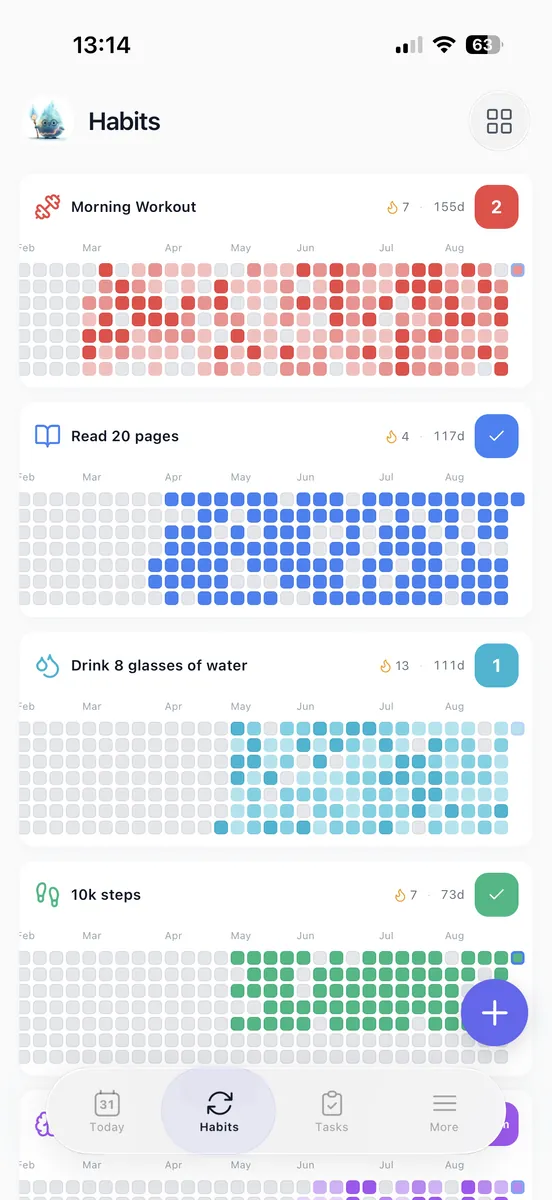
Every day you check off fills in a grid of your last 365 days, so you can see if you are getting better.


Free plan with no time limit. No credit card.


Work Quotes for Appreciation and Healthy Limits
The final two selections focus on how people are treated at work: recognizing a contribution and respecting the need for rest. Use them to guide a practical message or decision, not as a substitute for the conversation that work requires.
5. When You Want to Appreciate a Coworker
The U.S. Surgeon General’s workplace well-being framework says, “Knowing you matter has been shown to lower stress, while feeling like you do not can raise the risk for depression.” The line gives context for coworker appreciation: recognition matters, but the useful part is telling someone what you noticed.
If a coworker clarified a handoff, name that action and how it helped you complete your next step. For example: Thanks for clarifying which file to use. That let me finish the review without guessing. A specific thank-you is often warmer and easier to receive than forwarding the full research quotation.
The same idea can guide teamwork and leadership. Recognize the contribution, credit the person responsible, and ask whether they would prefer a private note or shared acknowledgment. When you are writing a team message, be clear about who did what instead of offering general praise that leaves the contribution unnamed.
6. When You Need Permission to Stop
The framework also says, “Workers who do not get adequate rest are more likely to have a workplace injury or make mistakes.” This is a work-life balance and responsible work ethic selection. It can help you make a clear decision about ending work, rather than treating late hours as the measure of commitment.
Before stopping at the appropriate end of your work period, identify the next action, record where the work stands, and communicate any handoff. For example, note what remains in a draft, what you need to continue, and who needs that information. A clear handoff helps make the stopping point understandable to others.
If you manage a team, make priorities and coverage clear rather than praising late hours. People need to know what can wait, what requires a handoff, and who is responsible for urgent work. If you want a brief prompt to mark the end of your own day, try evening reflection questions.
Choose a Quote for Yourself, Your Team, or Feedback
Before you copy a selection, ask three things: Who will receive it? What happened? What response would be useful? Those answers help you choose a workplace quote that fits the moment instead of sending a line that could mean anything.
For personal motivation, match the line to the decision in front of you, then attach a private action. Use the starting-point selection when you need to begin a task. Use the progress selection when you want to recognize what moved and decide what comes next.
For a morning team message, name the shared priority and the decision the team needs to make. The progress selection fits when the team can point to meaningful work already completed. Add one sentence that connects the line to the work at hand, then make the next decision clear.
For manager feedback, start with the work you observed and the support needed. The setback selection can open a conversation after a practice slips, but pair it with a useful question about the next attempt. Ask what got in the way and what adjustment would help. A quote cannot take the place of feedback or practical support.
For coworker appreciation, lead with the contribution and its effect. Use the appreciation selection as a prompt for writing your message, rather than asking your coworker to interpret a research excerpt. Name the work and why it helped you or the team.
For a meeting opening, connect the selected line to the agenda in one sentence, then move to the first decision. If a direct agenda is enough, leave the quote out. A message does not need an inspirational line to be useful.
Keep a positive attitude message grounded. Name the difficulty where it matters, identify what can change, and make the requested action clear. If you need a line about a goal rather than today’s workplace situation, see quotes about goal setting.
Use One Workplace Quote for the Next Seven Days
Try the same quote for the next seven days, changing it only when another workplace situation calls for a different line. The routine is a brief prompt for action, not a promise that a habit will form in a week.
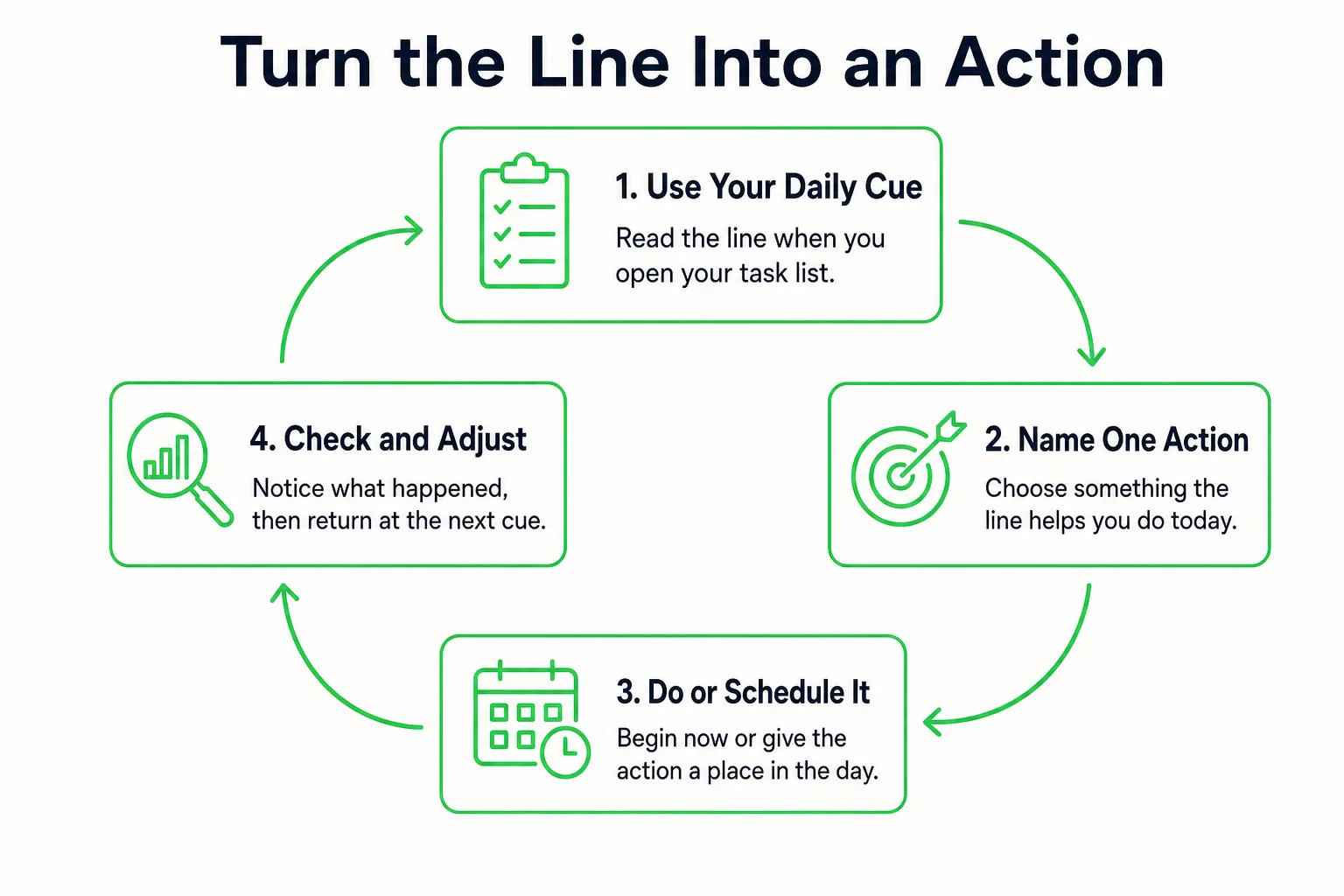
- Choose an existing cue, such as opening your task list at the start of the day. Put the selected line somewhere private and easy to reach, such as a note beside your task list.
- Read the line once and name one action it suggests. Keep this check-in short enough to fit an ordinary workday. For example, the action might be to identify the first step in a proposal or thank a coworker for a specific contribution.
- Do the action, or place it at a specific point in the day. Reading the quote is the cue; carrying out the action is the work. If you cannot act right away, choose a time that fits your schedule.
- At your next check-in, note whether the action happened and what needs adjusting. If you miss a day, return at the next cue rather than trying to make up for it. For more help with that restart, see how to begin a habit again.
- After seven days, decide whether to keep the line, choose another, or keep only the useful action. Let the choice depend on whether the prompt still helps you decide what to do.
The loop is simple:
Existing cue → read one line → choose an action → check in and adjust
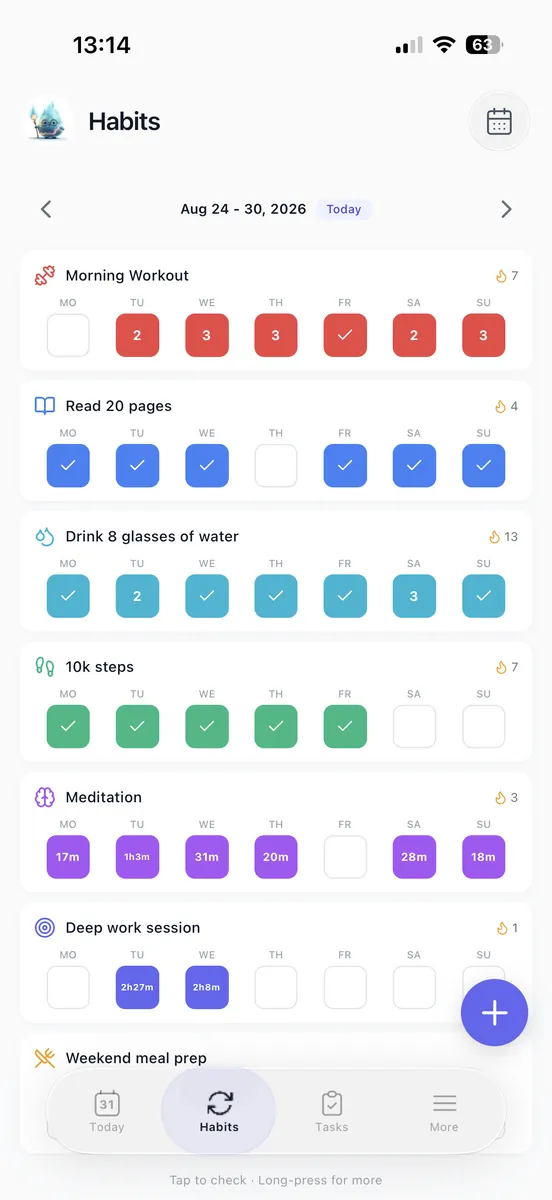
In Loggd, you can give the check-in a flexible habit schedule and put its next action on your task list.
Write the Message That Goes With the Quote
A useful workplace message connects the selected line to something a person can do or recognize. Keep the sourced line separate from your own words, and make the practical point clear.
Copy this scaffold and fill in the brackets:
[Selected line and source]. Today, that means [specific action]. [Time, support, or acknowledgment that makes it practical].
Use the first part to identify the line you chose. The second part turns it into a next step. The last part adds what would help make that step possible, or recognizes a specific contribution. Keep each part brief; the message should sound like something you would actually say at work.
- For a personal task note, you could write: Draft the first paragraph before checking messages. This gives me a clear starting point for the proposal.
- For a team meeting note, you could write: Today, name the decision we need and who owns the next step. We will confirm both before we move to the next agenda item.
- For a coworker thank-you, you could write: Thanks for clarifying the handoff. That helped me see what information to use for my next step.
To trim your message, keep the action or acknowledgment and remove general encouragement that adds no decision. If the message still works without a broad statement about staying positive, cut it. Name the actual task, contribution, or support instead.
Choose one selection now and write the sentence that connects it to your work today.