Things to do alone can be as simple as reading a chapter at home, taking a nature walk, or visiting a museum. Pick something that fits your time, energy, and budget, then decide whether you want rest, learning, movement, or a little company.
Going alone can still put you around other people. You might take a class, browse a café, or join a volunteer shift without needing to bring a friend. To get started, choose one activity, gather what it needs, and try its shortest useful version. A pleasant afternoon can be the whole reason to do something. You do not need to turn every free hour into a project.
Choose a Solo Activity That Fits Today
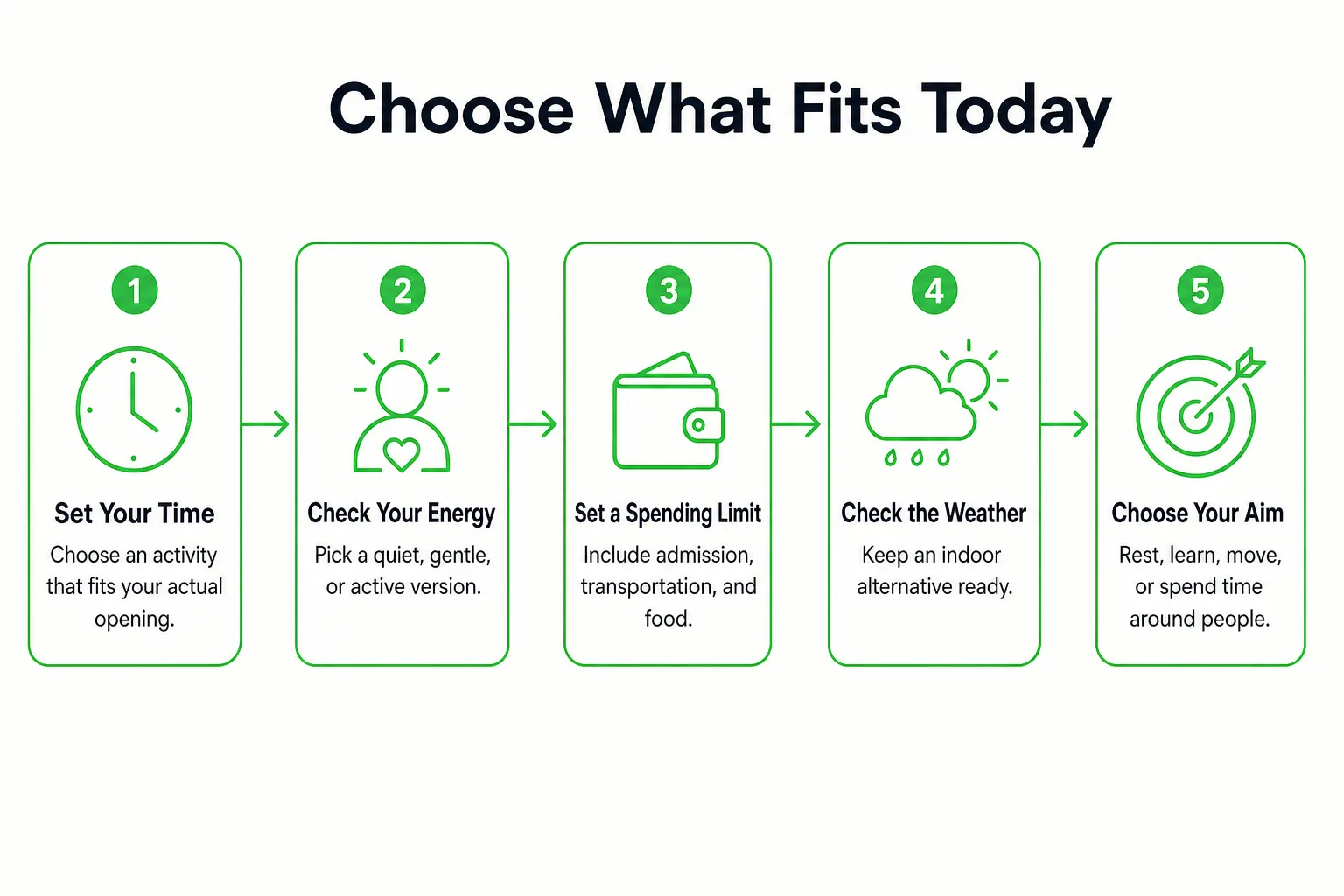
Start with the limits of today, then choose the kind of experience you want. Check how much time you have, your energy, your spending limit, and the weather, in that order. Then decide whether you want rest, learning, movement, or company.
| Desired feeling | Low-energy option | Higher-energy option | Free or low-cost starting point |
|---|---|---|---|
| Rest | Read a chapter or try focused breathing | Take a slow walk in a quiet place | Read something you already own |
| Learning | Try a brain game | Visit a museum | Borrow a puzzle book or choose a free exhibit |
| Movement | Stretch at home | Walk a neighborhood route | Take a walk on a nearby public path |
| Social contact | Sit in a café around other people | Join a beginner class | Visit a library or community event |
Wanting company is different from having energy for conversation. A café, bookstore, or public garden can give you the sense of being around people without asking you to join a group. If you are unsure whether you want conversation or quiet, check your social energy before choosing a class or meetup.
Use time as a simple default: stretch or sketch for 10 minutes, walk or read a chapter for 20, or browse a bookstore or start a small creative project for 60. If your outdoor choice depends on the weather, pick an indoor alternative before you leave.
Pick Something Enjoyable to Do Alone at Home
At home, choose an activity with an easy stopping point. Ordinary supplies are enough: a book, paper, a phone, or ingredients you already have.
Quiet Self-Care
Read a chapter, journal about one question, or listen closely to an album without doing something else at the same time. You could also try focused breathing. NIH describes it as one of the mindfulness techniques intended to reduce stress and support well-being; your own experience may vary.
Give the session a finish, such as one page of reading or a few lines in your journal. If you want a bounded session, set a stopwatch and stop when the chosen time is up. For an actual rest break, use the power nap calculator to help choose a nap window.
Creative Activities
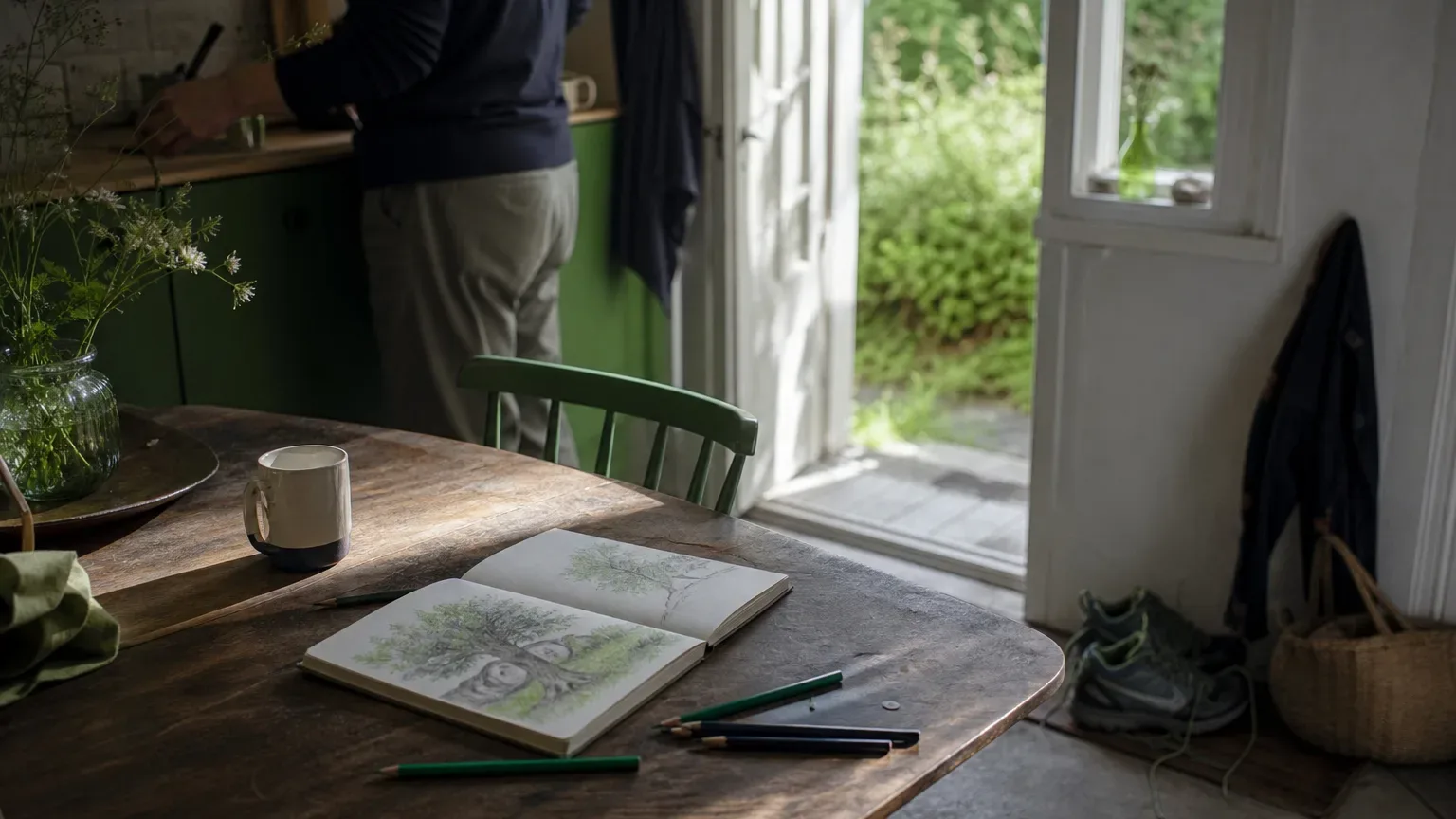
Sketch an ordinary object on your table, arrange a few photos, cook a meal from what is available, or practice a short piece of music. Choose one small outcome, such as one sketch, one recipe, or one practice session. You can stop there without buying special equipment or planning a bigger project.
Learning or Play
Try a crossword or another brain game, practice a few phrases in a language, or learn one small craft technique from materials you have at home. Pick one puzzle or technique, then call it done when you finish that attempt. A clear endpoint makes it easier to enjoy the activity without letting it take over the evening.
Find Things to Do Alone Outside or in a New City
Gentle Outdoor Time
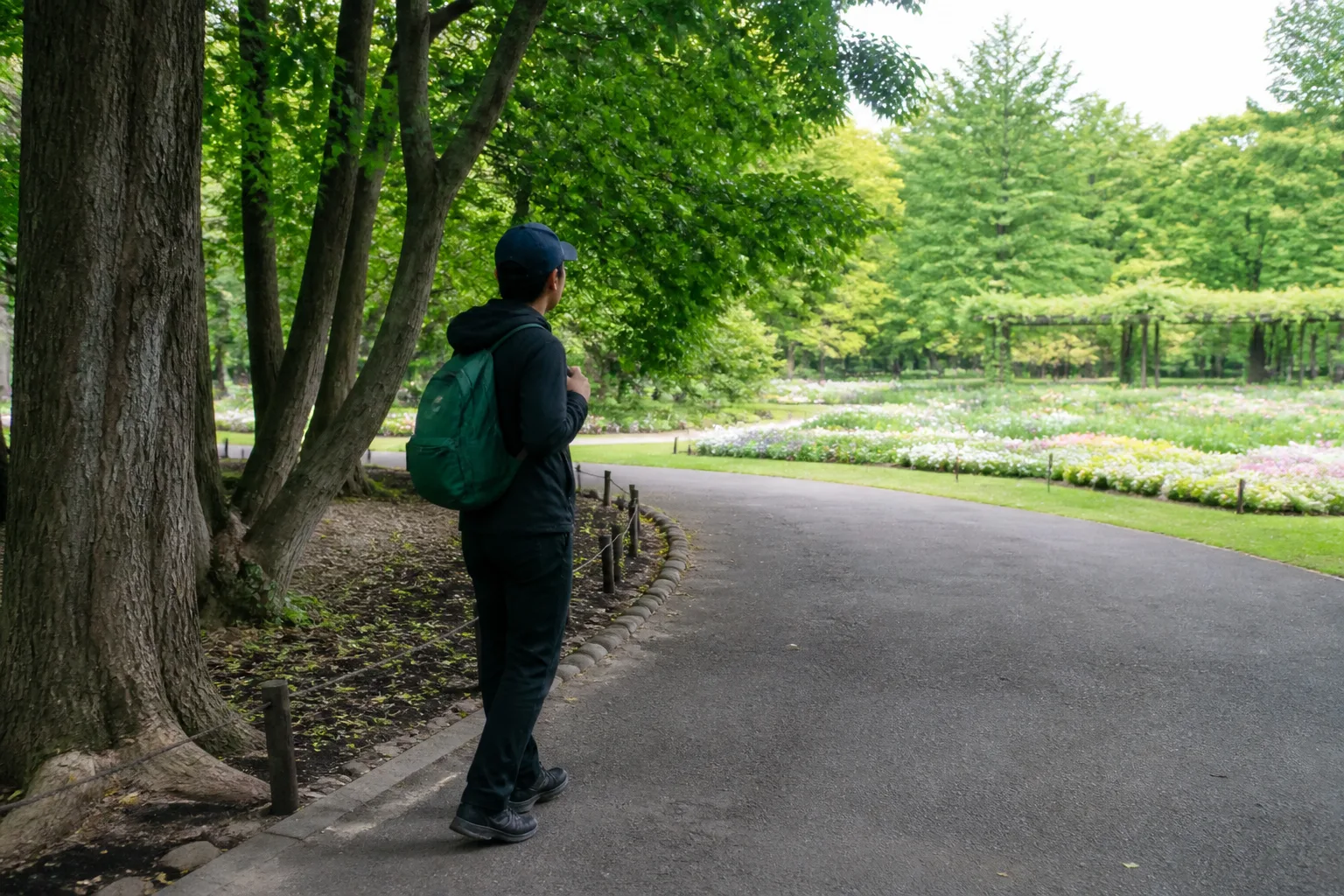
Take a familiar nature walk, or bring your phone or camera to photograph plants in a public garden. The CDC says sitting less and doing any amount of moderate-to-vigorous activity can provide health benefits, though a casual outing may not reach that intensity. The National Park Service reports mood, self-esteem, and relaxation benefits from five minutes of walking in nature. It also observes that people are more likely to repeat exercise in a natural setting, which may make a nearby trail or park a useful place to start.
Indoor City Outings
Browse a bookstore, stop at a café, visit a museum, or catch a movie. A public place can offer the feeling of being around people without requiring conversation or a group activity. If you are traveling alone, choose one neighborhood to explore in daylight. You could visit a public market, join a guided cultural activity, or take photographs around a theme, such as storefront signs.
Something Unfamiliar
Try a beginner workout class, a guided outdoor activity, or an introductory workshop. Volunteering can also build contact into the activity. If you plan a long drive, choose a destination and include fuel and parking in your budget. For more ideas to save for later, browse the solo bucket list, then choose just one outing for today.
Try a 20-Minute Reset, Half-Day Out, or Weekend Day
A 20-Minute Reset
- Spend two minutes choosing an activity and gathering what you need.
- Spend 15 minutes reading, sketching, or walking.
- Use the last three minutes to put things away and decide whether you enjoyed it. Stop there. On a rainy day, sketch indoors instead of walking.
A Half-Day Out
- Check opening hours and transportation before you leave.
- Visit a museum or public garden. For a free option, go to a library instead of paying admission.
- Eat a packed lunch or a café meal that fits your budget.
- Browse a nearby bookstore, then head home. The outing is complete when you get home; you do not need to add another stop.
A Weekend Day
- Choose an easy breakfast, then go outside for a walk or another activity you enjoy.
- Have lunch and leave time to rest.
- Spend the afternoon on a creative project or in a class.
- End with a movie or meal. If it is raining, sketch at home and watch a movie there instead of going to a theater.
Leave open time between activities rather than scheduling every hour. If brisk walks become part of your routine, at least 150 minutes of moderate activity per week can lower heart disease and stroke risk. That is weekly context, not a requirement for your solo day. Finish when the plan ends, rather than adding activities to fill the day.
Give a Favorite Activity a Start Cue and a Finish
A small decision rule is more useful than a vague intention to make better use of your free time. Use this template for an activity you want to repeat:
After [existing event], I will [activity] for [small amount]. I am finished when [clear endpoint]. On a low-energy day, I will [short version]. If I miss it, I will return at [next cue].
For example, Jordan sketches one household object after Saturday breakfast and stops after 15 minutes. On a low-energy day, Jordan draws a two-minute outline instead. Putting the pencil and paper away marks the finish.
A tiny goal can help make a favorite activity easier to repeat. Keep purely restful activities available without turning them into assignments. You can save future experiments in the bucket list maker and choose one later, rather than planning every possibility now. For a satisfying finish, put away your materials, save the photo, or mark the attempt complete.
Check the Route, the Exit, and the Way Home
Before trying an unfamiliar solo activity, make a quick plan for getting there and leaving. A little preparation can make it easier to focus on the activity itself.
- Check the weather, opening hours, transportation options, and route home. Bring a charged phone and the supplies you need.
- For an outdoor route, check its difficulty and daylight hours. Choose conditions that fit your current ability, and tell someone your route and expected return time when appropriate.
- For an evening outing, plan your ride home before you arrive and favor well-lit public places.
- For a drive, set your navigation before moving. If you need to use your phone, pull over somewhere safe first.
- For a Meetup or other gathering, check the organizer and location. Choose a public meeting place and keep your own way home.
- If you feel unsure, start with a short visit and decide how you will leave. Leave if the setting or conditions feel unsafe.
Keep Your Favorite Solo Activities Going With Loggd
A solo activity can stay a one-time experiment, or it can become something you look forward to repeating. Try a neighborhood photo walk as a small test: take a few pictures, then decide if you want another outing.
Put the first walk on Loggd’s task list. Add a priority or tag if that helps separate it from errands. If you want to repeat it, set a flexible habit schedule, such as a Saturday photo walk. You can also use the focus timer for a chosen session of drawing or reading at home. Tasks and focus sessions can connect with goals when the activity supports a larger project.
Keep the finish line small. Completing the walk or reading session counts; you do not need to make an impressive photo or finish a book. In Loggd, checking off days fills a grid of your last 365 days, so repeated attempts are visible. Points and streaks are there as optional motivation.
If you want a separate record of how an outing felt, you can log the experience in the mood tracker. At the end of the week, consider its enjoyment, effort, cost, and whether you want to do it again. Keep it, shorten it, replace it, or drop it based on what you noticed. Loggd is free on iPhone, Android, and the web, with no credit card needed.
More Questions About Doing Things Alone
What are some interactive activities to do alone in New York City?
Try a self-guided neighborhood photo walk, browse a public market, or visit a museum and choose a theme to look for as you explore. For a more social outing, consider a beginner class, guided cultural activity, or volunteer shift where you can join in at your own pace.
How can I start a conversation at an activity when I arrive alone?
Ask a simple question about the activity, such as whether someone has tried the class before or what they recommend at the market. You can also introduce yourself to the organizer and ask how the activity works. If you would rather observe at first, that is a fine way to begin.
How can I find free museum days and low-cost activities in a new city?
Check the museum’s official website for free admission hours, discounted days, and reservation details. Public libraries, parks departments, community centers, and local event calendars can also list low-cost programs. Check transportation and any required fees before you set out.