TL;DR. Monk mode is a fixed 30 to 90 day season where you narrow your life around one goal, cut the inputs that fragment your attention, and stop on a date set in advance. Skip the isolation machismo. What decides the outcome is the scope you defined, the exit criteria you wrote before day 1, and the maintain list of sleep, movement, and people you love. That third one separates a finished monk mode from a burnout story.
Search monk mode and you get a wall of the same page. A stock photo of someone meditating on a mountain, a promise about your highest self, a rule list that includes deleting your friends and waking at 4am, and an upsell near the bottom.
The underlying idea is fine, and old: you get depth by removing things, not adding them. Monks did not achieve focus through willpower, they built a life with very little in it. The packaging is where it goes wrong, so here is the version without the mountain.
What monk mode actually is
A defined stretch of time, usually 30 to 90 days, where everything else steps aside for one thing. Three components, and that is the whole protocol:
- One focus. Not three. One.
- A shorter life. Remove the inputs that fragment attention, keeping only what serves the focus and what keeps you functioning.
- An end date you chose. Written down, before you start.
Everything else, the cold showers, the 4am alarms, the podcast about suffering, is styling. Some of it is harmless. Some of it is why people quit in week two.
The bro science to strip out
Four claims that show up in nearly every monk mode article, all worth dropping.
"Cut everyone off." No. Removing distraction is not the same as removing people. Your partner, your friends, and your family are not attention leaks, and the advice that treats them as optional produces the failure where somebody finishes 90 days and finds the important part of their life has quietly degraded. Cut optional social obligations if they are eating your evenings. Protect the relationships that matter, explicitly.
"Dopamine detox." The pop version is not what the neuroscience says. You are not draining and refilling a reservoir. What actually happens is duller and more useful: you stop reaching for the phone in every idle second, and boredom becomes tolerable again. Worth doing. Not a chemical reset.
"Sleep is for later." Cutting sleep to buy hours turns a 90-day season into 30 days of good work and 60 days of expensive noise.
"Suffering is the point." It is not. The point is a finished thing. If your monk mode is mostly generating content about how hard your monk mode is, the monk mode has become the project.
Step 1: Define the scope before anything else
Most monk modes fail before day 1 because the focus is a mood rather than a target. "Get my life together" is not a focus. "Get in shape and also learn Spanish and also fix my sleep and also start a side project" is four focuses, which is zero.
Write one sentence with a deliverable in it:
- Pass the exam on December 14.
- Ship version 1 of the app to the store.
- Finish the manuscript draft, all 80,000 words.
If you cannot name what would exist at the end that does not exist now, do not start yet. Spend a day making the focus specific. That is the highest leverage day of the season.
Step 2: Write the exit criteria before day 1
This separates the protocol from the aesthetic, and it takes two minutes. Finish the sentence: monk mode ends when... The exam is done. The app ships. Day 90 arrives. The draft is finished. Whichever it is, write it down before you begin.
An open-ended monk mode has no success state, so it can only end in exhaustion or in quietly forgetting about it. Both feel like failure regardless of what you produced. A season with a defined end can be finished, and finishing changes how you remember it.
An exit criterion tied to a deliverable also catches monk mode as avoidance, where rules and schedules feel like progress while the hard work stays untouched. A date alone does not.
Step 3: The three lists
This is the structural core, and it is the shape the monk mode planner is built around: eliminate, commit, maintain.
Eliminate. What goes quiet for the season. Social media, news, games, dating apps, late-night video, whatever you reach for without deciding to. Two or three real ones beat a performative list of nine, and make each boundary binary, because "less" needs a judgement call every time and "none" does not. If your main leak is the phone, the digital detox tracker handles that one on its own terms.
Commit. The daily practice, the part that moves the goal: a protected deep work block, two hours of instrument practice, a training session, a fixed wake time. One to three items. A commit list with six things on it is the fragmented life you were escaping, with a stricter tone.
Maintain. The list almost everyone skips, and the reason most monk modes end badly. Seven to eight hours of sleep. A daily walk outside. Real meals. Time with family or friends. Sunlight before noon. One screen-free evening.
The case for that third list is not softness, it is structural. A monk mode is elevated load carried for weeks, and the maintain list is the load-bearing infrastructure: sleep is where skill consolidation and recovery happen, walking outside is the cheapest regulator of mood and attention there is, and the people who care about you are the reason the goal is worth reaching. Cut all three and you have not made the season more intense. You have made it shorter, and you will not notice until week three, when the work quality drops and you read that as needing to try harder.
The finished monk modes I have seen up close all kept the maintain list. The burnout stories all sacrificed it first when the schedule got tight.
Step 4: A daily shape that fits on an index card
Three blocks. Morning, afternoon, evening. Plain sentences.
- Morning: deep work 6 to 9, no phone until the block is done.
- Afternoon: day job, training at 5.
- Evening: practice hour, walk, read, lights out by 11.
That is the correct level of detail. A schedule needing a spreadsheet is one you will abandon, because maintaining it becomes its own daily task.
Put the focus work before anything that can expand, usually meaning before email and the day job. If your deep work block keeps evaporating into other people's priorities, block it as a real appointment with the time blocking planner. If you sit down and drift within ten minutes, a fixed interval beats resolve, which is what the pomodoro timer is for.
Step 5: Check in daily, honestly
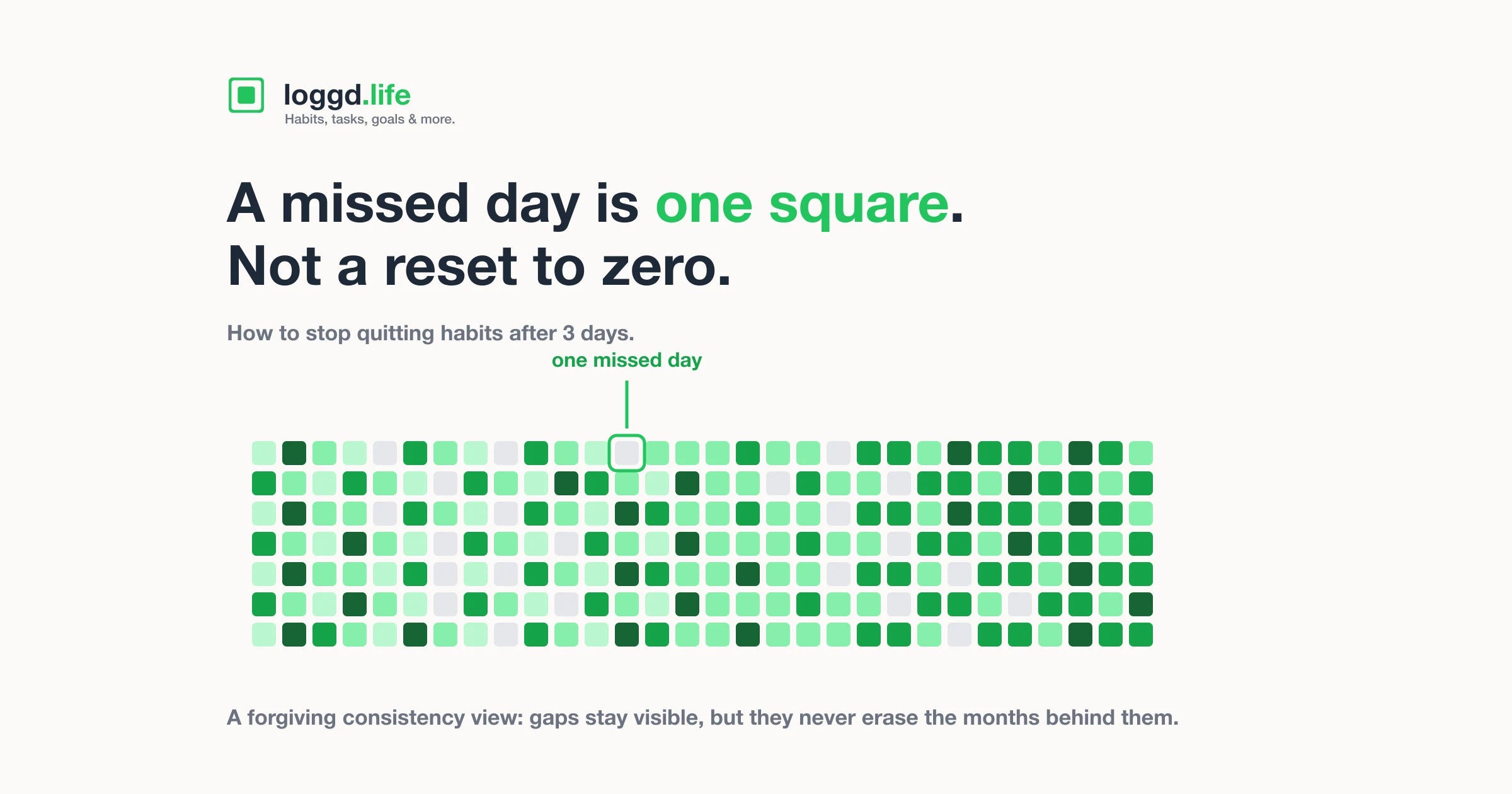
One question at the end of the day: did I honor the rules today. Yes, partly, or no. Not a journal, not a performance review. Three states and a mark on a grid.
A season this long is impossible to evaluate from memory. Three weeks in you have no reliable sense of whether it is working, and without a record you substitute whatever mood you are in that evening. A grid of honest marks tells you the truth: strong fortnight, bad week, the Tuesdays are the problem.
Record partial days as partial. A fake perfect run is worse than useless, because accuracy is the only value the record has. Same argument as in how to stop quitting habits after three days: the mark exists to inform you, not grade you.
Monk mode has no referee and no restart rule. The pattern that ends a season is not one broken day. It is the moment you stop checking in.
Choosing the length
30 days. A skill push, an exam sprint, a small finished draft. The right first attempt if you have never run one.
60 days. A substantial project, a serious training block, a language pushed to conversational basics.
90 days. Shipping a product, a manuscript, a career transition. The upper end for most people with jobs and families. Past 90 days you are not in a season, you are living like this, and that deserves a conscious decision rather than an extended challenge.
For the same shape with a seasonal deadline instead of a day count, the winter arc runs the identical idea from October to January.
The failure modes, named
The week two crash. Novelty carries the first ten days, then the rules stop feeling like an identity and start feeling like a chore. Nothing has gone wrong. Do not add rules to compensate. Hold the commit list and cut anything on the eliminate list that was never a real problem.
Monk mode as avoidance. Rules, planning, and tracking all produce the sensation of progress. If week three arrives and the deliverable has not moved, the season is decorating the work rather than doing it.
Secret monk mode. Withdrawing without telling anyone what you are doing or when it ends reads as rejection. Tell them the focus and the date.
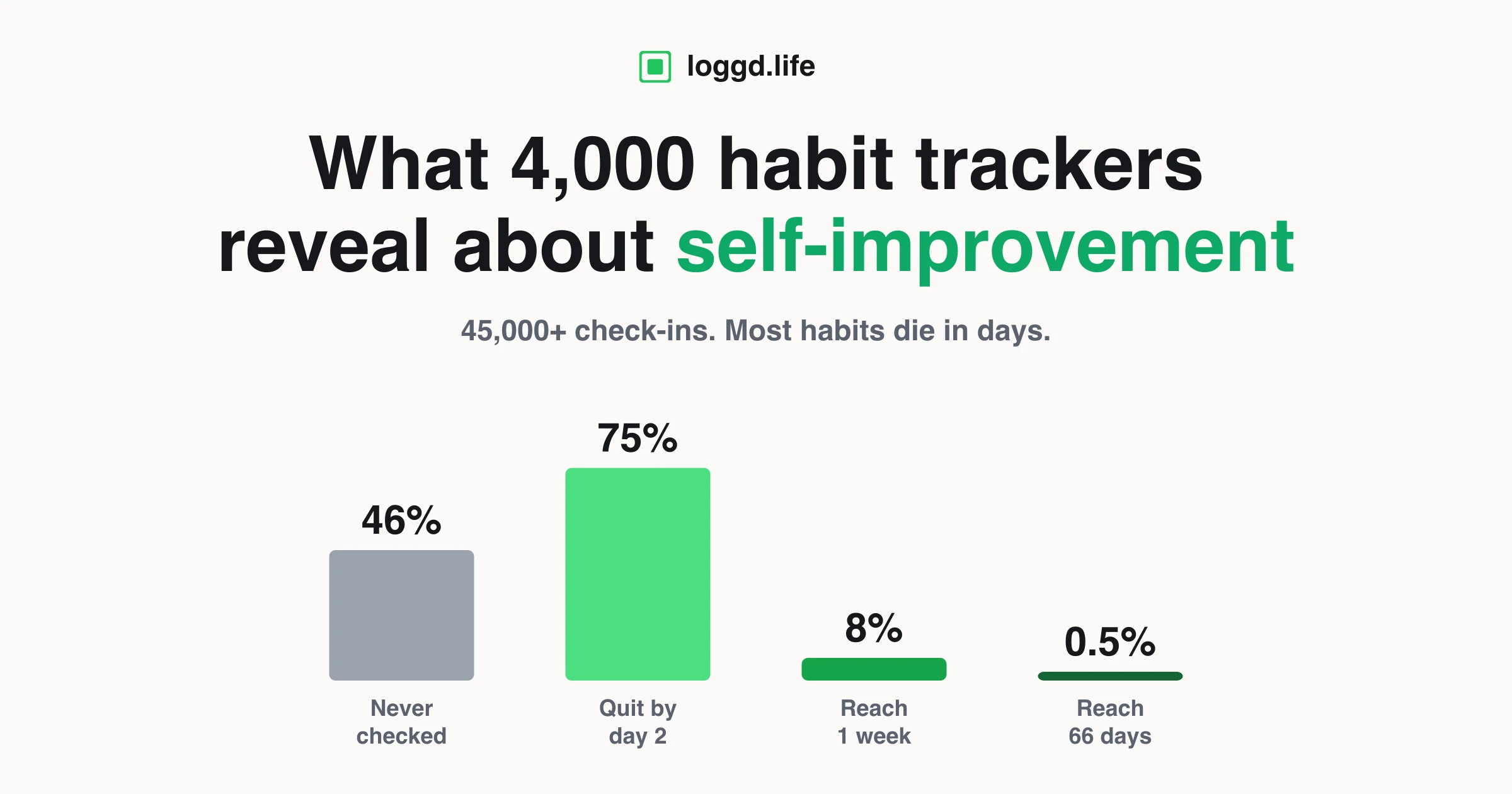
Confusing intensity with output. The published Loggd data is blunt: around 60% of people who sign up to track a habit never log a single check, and roughly 75% of tracked habits never get past a one-day streak. The full picture is in what 4,000 habit trackers reveal. Ambition at setup time predicts almost nothing. Small commitments repeated on ordinary days do.
Coming out of it
Plan the landing, because the day after a monk mode ends is disorienting.
Look at the record and answer two questions. Did the deliverable happen. And which rules do I want to keep now that nothing is enforcing them. Usually one or two graduate into ordinary habits and stop needing a name. The rest was scaffolding and can come down.
Then reconnect deliberately: the people you saw less of, the hobby you paused. That is part of the protocol, not a lapse in it. The failure here is starting a second monk mode immediately because normal life feels flat without a countdown.
Who should not do this
If your goal is unclear, get it clear first. If you are already exhausted, a season of elevated load is the wrong instrument, and subtraction without a project is the better move. If the appeal is mostly the identity of being someone in monk mode, that runs out around day 12 and takes the whole thing with it.
And if you are doing this to escape something rather than build something, the isolation makes it worse, and the protocol is very good at hiding that for six weeks.
Monk mode is a container: one focus, fewer inputs, a written end. Keep the sleep, keep the walks, keep the people. Then go be quiet and finish the thing.
Last updated: September 2026.
Written by Eusebiu, the solo founder building Loggd in public. I build the app in the evenings around contract work and a small daughter, so my monk mode has always had to fit inside a life rather than replace one. I share the aggregate numbers on Threads.
Keep the season honest. Loggd records your practice as a contribution grid, so a partial week reads as a partial week rather than a broken streak. Start free.