A habit routine is a set of actions you repeat in a familiar part of your day. Build yours by choosing a goal, attaching one useful action to a clear cue, and deciding what you will do when time is short.
A routine is something you deliberately follow; a habit is an action that may become easier with practice. Start with one part of an ordinary day, not a redesign of your whole week. The aim is a sequence you can repeat, with a regular version, a busy-day version, and a clear point to restart when plans change.
Connect Your Goal, Routine, and Habit
A goal is an outcome you want. A routine is a sequence of actions you deliberately repeat. A habit is a familiar behavior that becomes easier to perform through repetition. Through repetition or conditioning, a behavior can become regular and increasingly easy to perform. A routine can include habitual actions, but it can also include steps you still choose to do deliberately.
Here is how the three pieces fit together. Say your goal is to finish a 200-page book in four weeks. Your routine is to put your phone aside, sit down after dinner, and read 10 pages each weekday. The behavior you practice is opening the book after clearing your plate. The planned pace adds up to 200 pages across 20 reading sessions. If you read fewer pages in some sessions, use a review to adjust the remaining reading or the finish date.
A habit pattern is the recurring situation and response you notice. For example, you clear the table and then pick up your phone. You could use that same moment as a cue to open your book instead.
Call the combination of the cue, action, schedule, and review your system. It helps to review the routine and the goal separately. Did you sit down to read after dinner on the planned days? Did the reading move you toward finishing the book on time? You can follow your routine consistently and still need to revise the goal’s pace or deadline.
Choose What Deserves Daily Space
Put an action in your daily routine when it supports your current priority, benefits from that frequency, and fits the time you can actually reserve. When priorities compete, decide what needs doing now and what can wait.
Start with one goal. List the actions that would help you make progress, then choose the smallest useful action to practice first. Set your time budget before adding anything else. In a 15-minute evening slot, a 10-minute reading session and a brief preparation task leave more room than several unrelated activities.
Move actions that do not need daily attention into a weekly or monthly plan. Laundry might fit a weekly routine. Checking whether your calendar still fits may suit a monthly review. A recurring action belongs in a routine; a one-time task, such as renewing a document, belongs on a task list. Reviewing tomorrow’s appointments can be part of an evening routine because it happens repeatedly.
How many habits should you include? Use a capacity test, not a universal number. Begin with one new repeated action. Add another only when both actions fit an ordinary day without crowding out your existing commitments. A personal interest does not have to become a daily habit to matter.
Choose the simplest planning setup that supports the decisions you make often. For example, keep one cue, one action, and one check-off together. After you clear your plate, read; then mark whether you did the planned version or the smaller one. A single, clear record can be easier to use than separate systems for every action.
 Loggd · by the makers of this blog
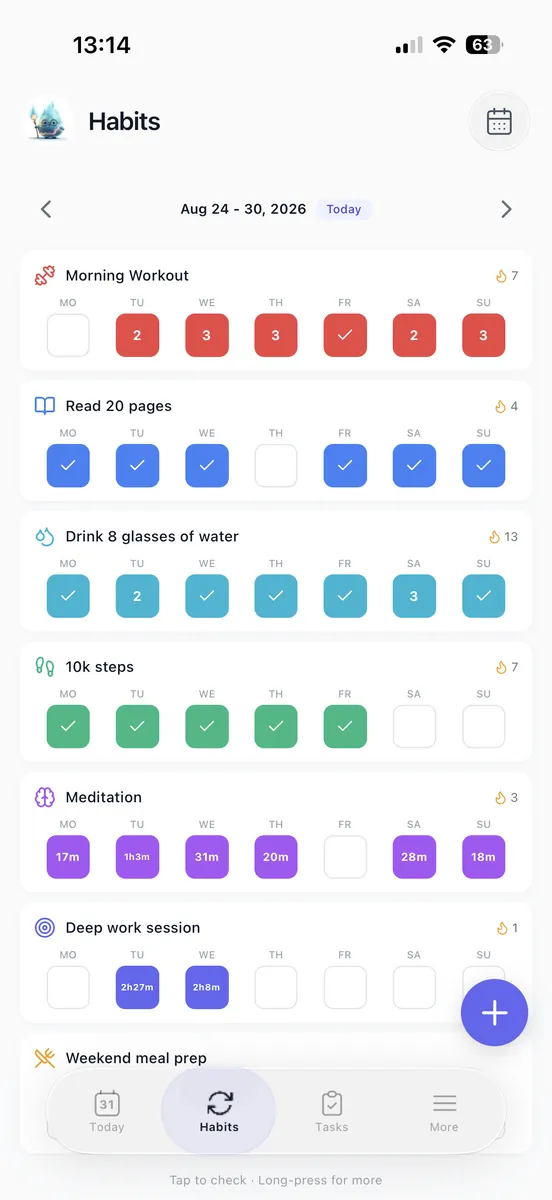
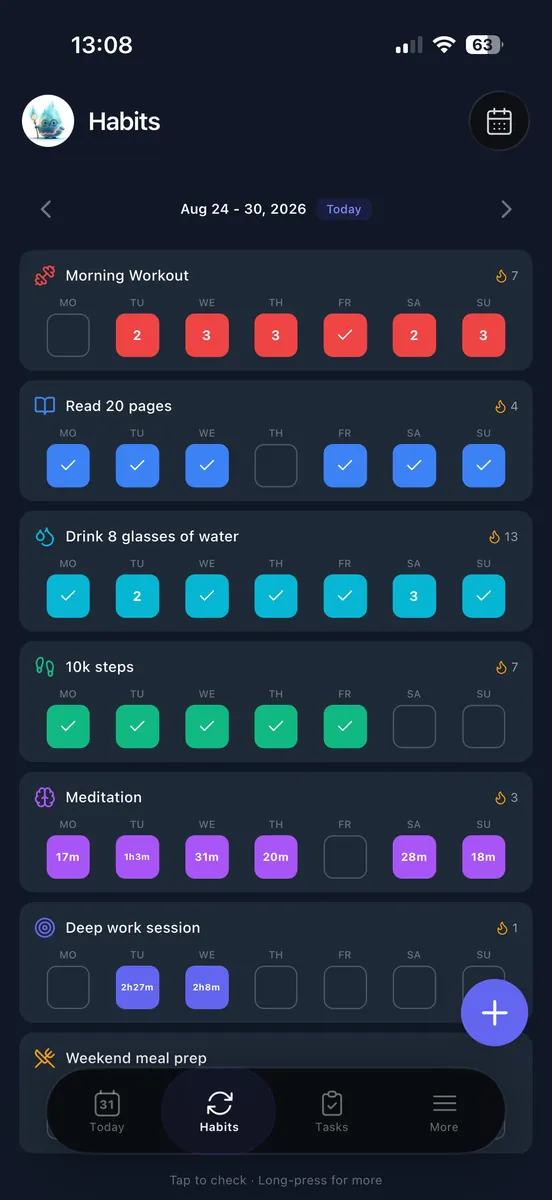
Track your habits, tasks and goals in one free app.
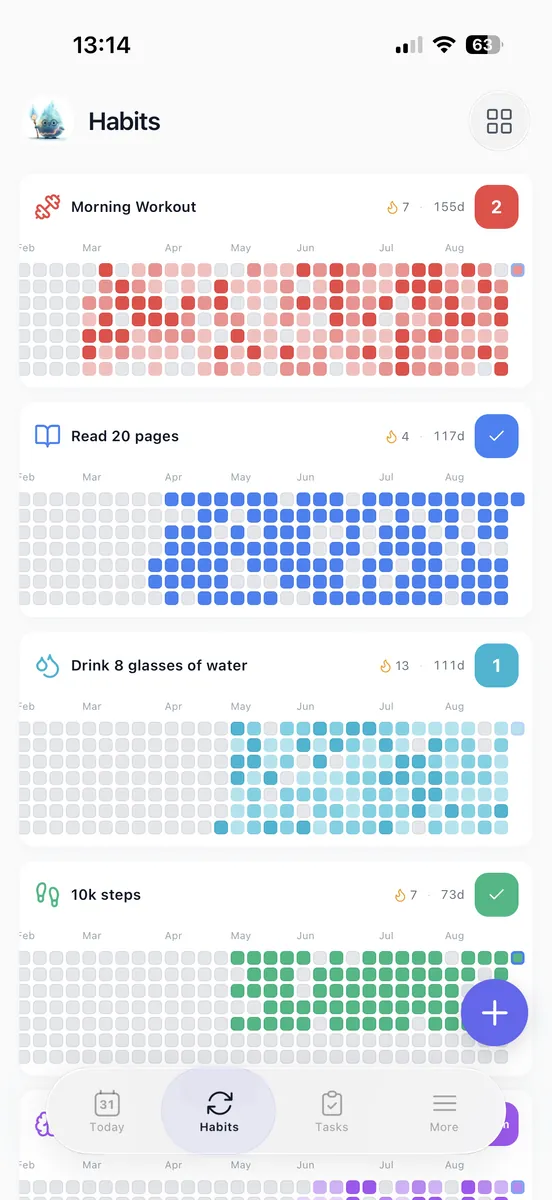
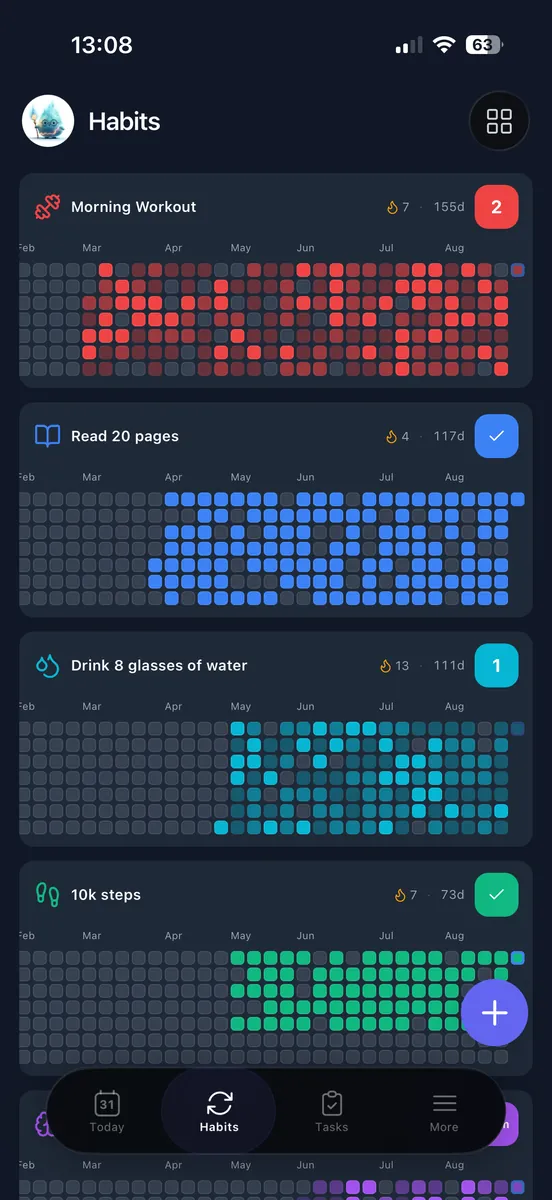
Every day you check off fills in a grid of your last 365 days, so you can see if you are getting better.




Free plan with no time limit. No credit card.


Give the Action a Cue and a Small Starting Point
Choose a cue you can recognize without checking the clock. It could be clearing your dinner plate, ending a work call, or putting on your walking shoes. The more dependable the event, the easier it is to know when the action begins.
Write an implementation intention in ordinary language: “After I clear my dinner plate, I will sit in the reading chair and read 10 pages.” This pairs a clear cue with a specific action. Habit stacking uses the same idea: place a new action after something you already do. Choose an anchor that happens reliably enough to support the plan.
Keep a smaller version ready for a crowded day. After clearing your plate, open the book and read one page in the same chair, if you can. That is a short session, not the full 10-page target. It gives you a practical way to begin when the usual time is limited.
Use these questions to check the sequence: What starts it? What do I want at that moment? What will I do? What satisfying finish can I notice? If you want a break after dinner, for example, choose a comfortable reading place and leave the book there before dinner. Prepare what you need in advance, and make the first physical action explicit: pick up the book and open it. If you need help turning an existing action into an anchor, use the habit stacking generator to draft the pairing.
Build Your Routine Around the Day You Already Have
Start with the parts of your day that are already spoken for: fixed commitments, meals, travel, caregiving, and bedtime. Look for an available gap for your chosen action instead of assuming the morning is free. You can build a larger daily routine later. First choose one anchor period and make it work with the day you have.

Morning
If a morning action supports your goal, place it after a reliable event such as getting dressed or making coffee. You might check your fixed commitments, prepare what you need to leave, and choose the first task of the day. Keep only the actions that fit the time you actually have. Use the morning routine builder if you want help arranging your chosen actions before work or other commitments.
Workday
A short opening sequence can help you get oriented: check your appointments, choose the next concrete task, and reserve a focus block for it. Time blocking means setting aside space for one defined piece of work, such as drafting an outline, rather than promising to finish an entire project. Leave room between blocks for transitions and unfinished work. If the day changes, move the block or choose the next useful task instead of treating the original schedule as fixed.
Food and movement can also have a place if they serve your goal. You might pack lunch after dinner or take a walk after lunch. Choose one that fits your day; these are options, not requirements for every routine.
Evening
Your reading example could follow dinner: clear your plate, sit in the reading chair, and read the planned amount. You could also prepare one item for tomorrow and decide when to begin getting ready for bed. Most adults need at least seven hours of sleep each night. Aim for consistent bedtimes and wake times, including weekends when you choose your evening boundary. Use the evening routine generator to arrange the actions you want before bed.
Test one anchor period first. Once it fits an ordinary day, connect it to morning, work, or evening actions only if you need a larger daily routine.
Give Weekly Tasks and Monthly Decisions Their Own Place
A daily routine holds repeated actions. A weekly routine makes room for chores and upcoming commitments. A monthly routine checks whether your goal and calendar still fit together.
Set a weekly appointment to look over the coming calendar, choose household tasks, and plan groceries or meals if that helps. Then place your repeated goal action around any unusual days. For the reading plan, compare the coming week’s sessions with late meetings or travel. Move a session to another available time, or revise the page target at a review, rather than leaving the conflict hidden. If household preparation and calendar planning need more structure, use the Sunday reset checklist for that weekly session.
Give the monthly review a different job. Check the goal deadline and the work you completed. Ask whether a priority has changed, then remove or revise one recurring action if it no longer fits. Reading, journaling, meditation, or gratitude can each be an option for a routine, depending on what you want it to serve. Choose one that fits your goal and available space rather than adding all of them.
Put one weekly planning appointment and one monthly review on your calendar. For each, write the decision it needs to produce, such as “place reading sessions around next week’s late meetings” or “keep, revise, or pause this action.”
Adapt the Routine When Your Schedule Changes
A routine can keep its purpose even when the time or place changes. Choose an anchor that fits the kind of day you have, and plan your response before the usual opportunity disappears.
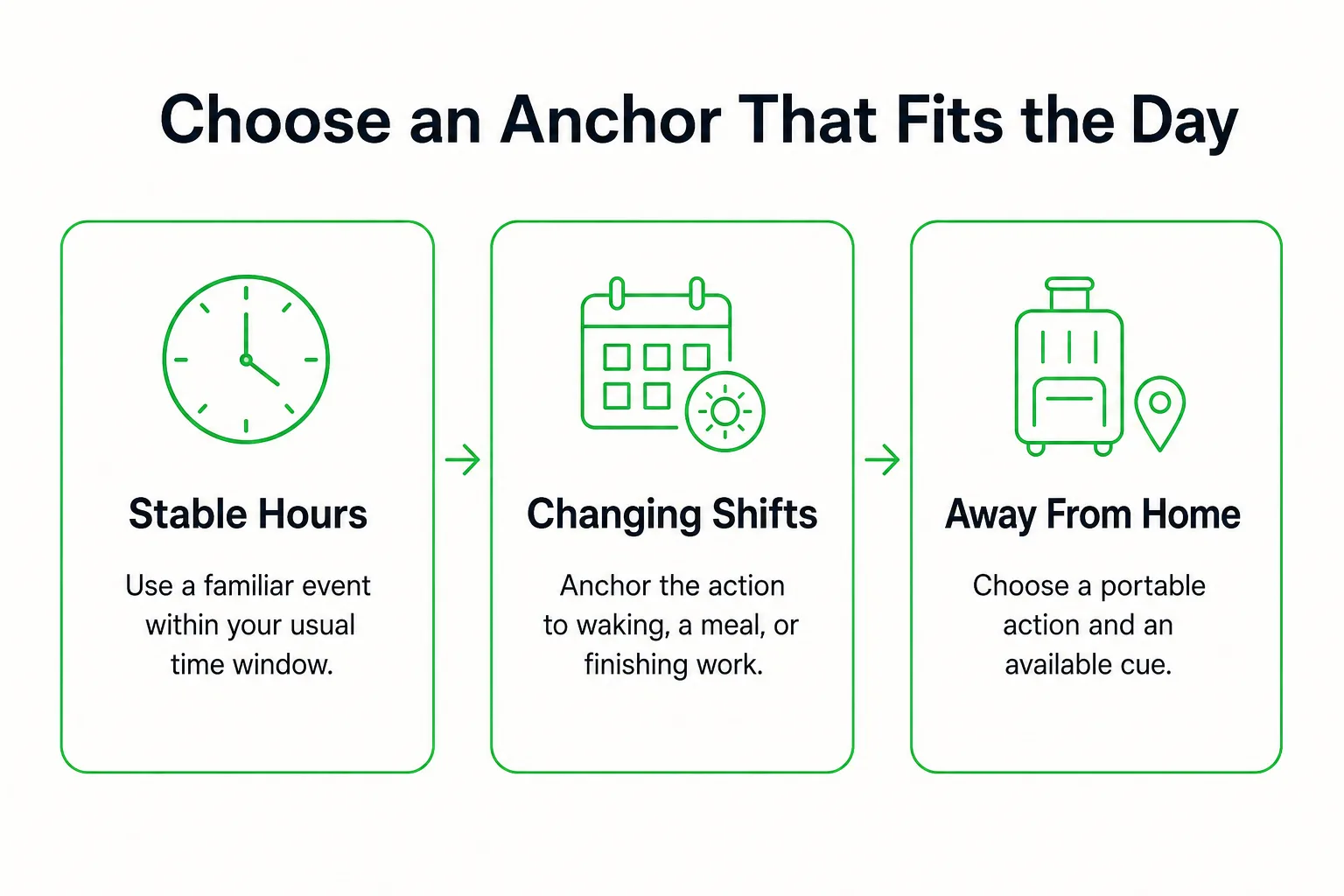
- Stable schedule: Reserve a usual time window and name the event that starts it. For example, read after dinner when you clear your plate.
- Changing shifts: Attach the action to an event rather than a fixed clock time, such as waking up, finishing work, or eating your main meal. Choose the anchor that is dependable on that day.
- Away from home: Pick a portable version and an anchor you can find at your destination. You might read the same book after dinner, after your main meal on a late shift, or during a quiet break while traveling.
Write a fallback opportunity before the disruption arrives. For example: “If dinner is late, I will read one page before beginning my bedtime routine.” Keep the same purpose while adjusting the timing and place to fit the day.
When a priority changes, ask whether the repeated action still serves your active goal. You can keep it, reduce its frequency, or pause it and set a date to review the decision. During an exam week, for instance, shorten recreational reading and use the available study block for exam preparation. At the next review, restore or revise the reading routine based on the time you have.
Change the logistics when your schedule changes. Reconsider the action itself when the goal changes.
Reset a Missed Routine Without Building a Backlog
When you miss a routine, use the next available opportunity to choose a manageable next action. Do not turn missed sessions into a growing list of extra work.
- Find the next opportunity. Name the next useful cue and check how much time you actually have. For instance, decide to read after dinner Tuesday rather than making an open-ended promise to restart soon.
- Keep the essential action small enough to do. Keep necessary commitments and choose the smallest useful version of your habit. If a reading slot has shrunk to two minutes, read one page. Record it as a small session, not as the full reading target.
- Skip optional add-ons for now. Leave out tasks such as writing a long note about the book or reorganizing your reading list. Put deadline-bound obligations in your task plan so they have a clear place.
- Record what got in the way. Write a few plain words, such as “late appointment,” “book not ready,” or “evening overfilled.” This gives you something specific to adjust if the same obstacle appears again.
- Prepare for the next cue. Put the book where you will need it and resume the ordinary version when time allows. If the same obstacle keeps appearing, change one part of the setup, such as the reading time or location.
For the four-week book plan, suppose you miss Monday’s 10 pages. On Tuesday, read the planned 10 pages rather than automatically assigning yourself 20. At the weekly review, decide whether to add another session or move the finish date. The smaller version keeps a place for the action, but it does not count as the original target. Distinguish it from a missed session in your notes so your review shows what happened.
End the reset with a next action you can name. For example: “Set the book by the chair, then read after dinner tomorrow.”
Use Review Dates Instead of Habit Deadlines
Treat numbered habit rules as prompts to review your practice, not as deadlines for expecting an action to become automatic. Use review points to check your practice, not as deadlines for expecting an action to become automatic.
For the plan you are building, use two practical checkpoints:
- After a week: Check whether your cue happened as expected and whether you had what you needed to begin.
- After a month: Check whether the action fit the time available and still supported your goal.
At each review, look at whether the materials were ready, whether the action fit your day, how often you used the smaller version, and whether the intended work moved forward. For the reading plan, you may find that starting feels easier because you reach for the book after dinner. That does not mean the 200-page goal is finished; you may still need to revise the completion date if your planned sessions changed. For more on the timing question behind these rules, read how long it takes to build a habit.
Use what you find to keep, shrink, move, or replace the action. Choose the change that best fits your goal and the time you can reserve.
Compare Your Planned Routine With Your Actual Year
Gather the routine you planned, your check-offs or notes, calendar changes, and anything that shows progress toward the goal. You can use a journal, computer program, or app to record patterns such as sleep, exercise, diet, or stress. Set aside what you have and review the year from those records, rather than from memory alone.
Use these questions as a checklist:
- What did I intend to repeat?
- What actually happened?
- Under what conditions did the routine fit?
- Which goal did it still serve?
- What will I keep next year?
Compare the plan with the pattern you can see. If you intended to read 10 pages after dinner on weekdays but your notes show that evening sessions often moved to lunch, test lunch as the new cue. You can still keep the same reading action and adjust when it happens to match your actual schedule.
Separate known missed sessions from times you cannot verify. Mark an uncertain stretch as unknown instead of estimating a precise total from memory. A gap in the record tells you that information is missing; it does not explain why.
Use Loggd's grid of daily check-offs from your last 365 days to look for stretches and gaps you want to compare with your calendar. If a broken streak is dominating your review, compare a contribution grid with a streak count before deciding what your record means for next year's plan.
Now make the next version smaller and more useful. Keep the routine that served a current goal, revise its cue to fit the schedule you observed, and remove an action that no longer belongs. Write down the result:
- Goal: Finish a 200-page book by the end of February.
- Repeated action: Read 10 pages on planned reading days.
- Cue: After lunch, sit down with the book.
- Busy-day version: Open the book and read one page.
- Next review: March 1.
Choose your own goal, action, cue, fallback, and review date, then put them where you will see them.
Sources
- habit formation
- Caring for Your Mental Health - National Institute of Mental Health (NIMH)
- About Sleep and Your Heart Health | Heart Disease
- Creating Healthy Habits